
Why Are Animal Hides Used in Shoe Production?
Animal hides, especially leather, are used in shoe production due to their unmatched durability, flexibility, and resistance to wear. Leather’s dense fiber structure allows it to mold to your foot over time, offering superior comfort. The tanning process enhances leather’s pliability and longevity, making it suitable for both everyday and demanding environments. Its aesthetic appeal and ability to develop a patina add to its timelessness. Interested in the intricacies of leather’s role in your footwear?
Key Takeaways
- Leather’s durability and flexibility make it ideal for producing long-lasting, comfortable shoes.
- Tanned leather resists wear and tear, enhancing shoe longevity and resilience.
- Leather offers timeless elegance and style, meeting consumer demand for aesthetic footwear.
- The tanning process preserves leather’s pliability and prevents decay, ensuring durability.
- Historical significance and cultural symbolism enhance leather’s appeal in shoe production.
The Durability and Flexibility of Leather

While leather is renowned for its durability, it’s the material’s ability to resist wear and tear that truly sets it apart in shoe production. Leather’s inherent durability is complemented by its flexibility, allowing it to mold to your foot’s shape over time. This adaptability not only enhances comfort but also provides essential support, making leather an ideal choice for footwear subjected to daily use. The tanning process further bolsters leather’s natural attributes, ensuring it remains pliable and long-lasting. Buffalo leather, noted for its exceptional strength and density, is particularly favored in crafting high-quality safety footwear. Unlike synthetic alternatives, leather’s capacity to improve with age while maintaining its functional integrity underscores its unmatched value in shoe manufacturing.
The Aesthetic Appeal of Leather in Footwear
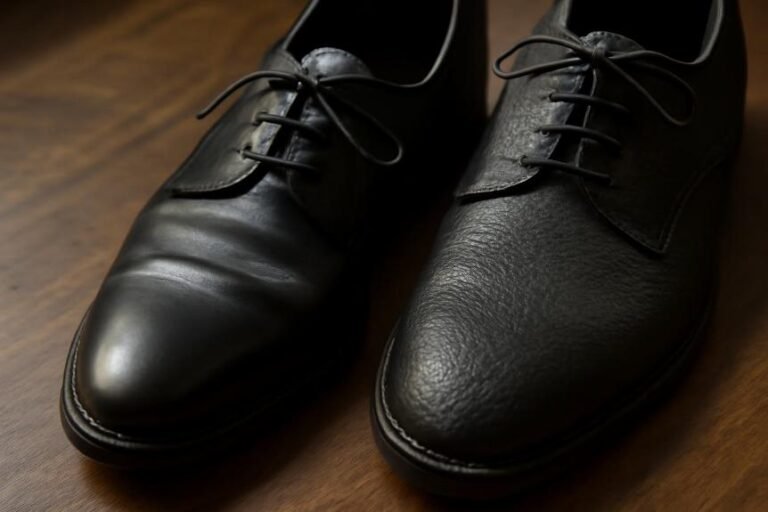
You can’t overlook the timeless elegance and style that leather imparts to footwear, as its natural textures and rich colors enhance visual sophistication. Full grain leather, cherished for its luxurious texture and ability to develop a patina, is often selected for high-end shoes, reflecting both tradition and modern fashion trends. The versatility of leather allows designers to experiment with various finishes like nubuck and suede, offering distinct tactile experiences and visual styles that consistently appeal to consumers seeking both aesthetics and durability.
Timeless Elegance and Style
Even as fashion trends evolve, leather remains a cornerstone in the world of footwear due to its unmatched combination of elegance and practicality. The hides or skins of buffalo and cow are particularly esteemed, providing durable leather products that exude high quality. Full grain leather stands out as the epitome of luxury, with its natural texture and rich color depth. This type of leather not only enhances aesthetics but also guarantees longevity, making it a preferred choice for discerning consumers. Its versatility facilitates a broad spectrum of styles, from refined dress shoes to robust boots, satisfying diverse fashion tastes. The unique patina that develops over time adds a personal flair, making leather footwear a timeless, stylish investment.
Luxurious Texture and Finish
Leather’s enduring appeal in footwear isn’t solely due to its strength and durability; its luxurious texture and finish play a critical role in its desirability. When you choose leather shoes, you’re opting for a material that transforms over time, developing a unique patina that enhances its rich, premium aesthetic. Consider these aspects:
- Texture and Patina: Full grain leather, known for its natural depth, ages beautifully, adding character and visual appeal to your footwear.
- Finishes and Durability: Leather’s variety of finishes, like pigmented or corrected grain, improves aesthetics by hiding imperfections and boosting wear resistance.
- Tactile Experience: With hides and skins offering options like nubuck and suede, you experience a soft, velvety touch that elevates the luxury feel of each pair.
Leather’s Resistance to Wear and Aging
Given its intrinsic durability, leather stands out as a preferred material in footwear due to its remarkable resistance to wear and aging. Leather is often derived from animal hides and occupies a significant role in the leather industry. Its natural properties, including a dense fiber structure, make it highly resilient. For instance, buffalo leather‘s denser composition compared to cow leather guarantees superior wear resistance, vital for manufacturing high-quality safety footwear. As leather ages, it develops a patina that enhances visual appeal while retaining structural integrity. Additionally, the tanning process preserves leather, preventing decay and enhancing longevity. This capability to endure stress and pressure is essential in demanding environments, guaranteeing shoes remain functional and durable over time.
The Historical Significance of Leather Use
When you consider the historical significance of leather, it’s essential to explore ancient craftsmanship that laid the foundation for its use in footwear. Over centuries, the evolution of leather footwear has been marked by advancements in tanning techniques, enhancing both durability and style. Additionally, leather’s cultural symbolism has often been tied to status and luxury, reflecting its enduring value across civilizations.
Ancient Leather Craftsmanship
Although often overlooked in modern times, the historical significance of leather craftsmanship is profound, dating back thousands of years as a pivotal element in human development. Animal hides have been used extensively, shaping the fashion industry since ancient civilizations like the Egyptians and Romans. Their leather shoes, crafted with intricate designs, symbolized cultural identity and social status.
Here are some key aspects:
- Ancient Techniques: The tanning process, including vegetable tanning, preserved hides, evolving over millennia to prevent decay.
- Cultural Artifacts: Archaeological finds, such as Greek leather sandals, showcase how leather was both functional and aesthetic.
- Tool Development: Specialized tools and techniques from ancient times laid the groundwork for today’s sophisticated shoemaking practices.
Understanding these elements enriches your appreciation of leather’s historical role.
Evolution of Leather Footwear
Building on the rich legacy of ancient leather craftsmanship, the evolution of leather footwear reflects both technological progress and cultural adaptation. Leather shoes, dating back to 3500 BC in Armenia, illustrate how raw materials like animal hides were chosen for their durability and flexibility. They provided essential protection against harsh terrains. As tanning processes advanced during the Middle Ages, leather footwear became synonymous with higher quality, allowing mass production and broader accessibility. By the 19th century, the industrial revolution transformed leather into a staple in fashion, prioritizing both style and functionality. Different cultures, from Native American moccasins to Roman sandals, adapted leather for diverse styles, showcasing the material’s versatility and cementing its pivotal role in footwear history.
Cultural Leather Symbolism
Leather, throughout history, has transcended its functional origins to embody profound cultural symbolism, representing status, durability, and artisanal mastery in clothing and accessories. Across various cultures, leather used in attire was a marker of social hierarchy, often reserved for nobility and warriors. Its enduring appeal highlights three key aspects:
- Cultural Heritage: Leather’s selection and treatment reflect deep-rooted traditions, showcasing intricate designs that signify cultural identity.
- Durability and Craftsmanship: Treated with chemicals to prevent decay, leather has historically offered both protection and longevity.
- Symbolism and Status: Its presence in ceremonial attire has been an indication of wealth and power, a tradition that continues in luxury fashion today.
Understanding leather’s past provides insight into its persistent symbolic significance.
Leather Production: From Hide to Shoe

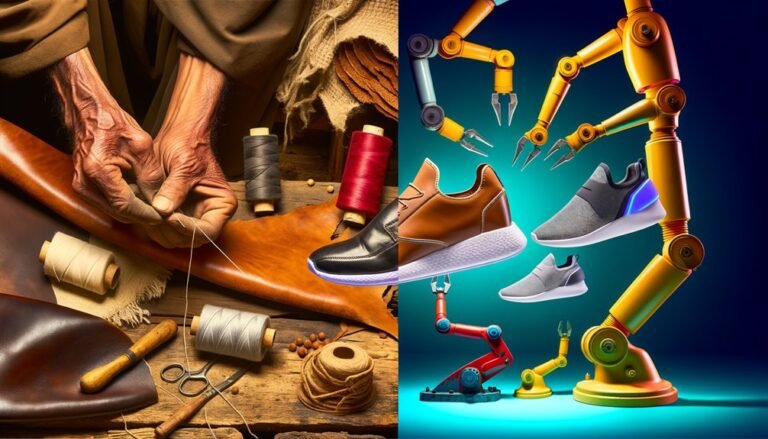
As you explore the intricacies of leather production, it becomes clear that this process is meticulously structured to transform raw animal hides into high-quality shoe material. Beginning with hides from cattle and pigs, the production involves soaking, chemical treatment, and tanning methods. Leather production employs a variety of leather types, with chrome tanning being predominant due to its efficiency in creating durable, high-quality leather. This method guarantees the preservation and strength of the material, making it suitable for footwear. Post-tanning, hides undergo finishing treatments, enhancing softness and pliability. They’re then cut and sewn into shoe shapes that meet strict quality standards. The growing global demand for durable leather shoes, such as those in the safety footwear market, underscores this process’s significance.
Ethical Considerations and Industry Challenges
While the meticulous process of transforming raw hides into leather shoe material showcases impressive craftsmanship, it also raises a host of ethical concerns and industry challenges. The leather industry is fraught with ethical implications due to its reliance on animal killing. Here are key challenges you should be aware of:
- Animal Welfare: Many animals endure painful procedures like branding and de-horning without pain relief, often suffering due to inadequate monitoring.
- Global Practices: Leather production in regions with poor animal welfare standards leads to inhumane treatment, complicating ethical consumption.
- Market Influence: Leather as a co-product of the meat industry supports animal farming’s economic viability, intertwining ethical issues.
The demand for cruelty-free alternatives reflects a shift in consumer preference, challenging traditional practices.
Exploring Alternatives to Animal-Derived Leather
In the quest to find viable alternatives to animal-derived leather, the fashion industry is increasingly turning to innovative materials that offer both sustainability and ethical integrity. Organic cotton, linen, hemp, Tencel, and bamboo lyocell represent sustainable options for footwear, providing eco-friendly choices that reduce environmental impact. Furthermore, plant-based materials like apple leather, mango waste, and mycelium are gaining traction as cruelty-free substitutes, aligning with the growing demand for vegan leather products. The market expansion is fueled by heightened consumer awareness of animal welfare and sustainability. Additionally, advancements in bio-materials that mimic animal textures allow for fashionable designs without compromising ethics. Retailers’ adoption of leather-free shoes underscores a significant shift towards more responsible production practices.
Frequently Asked Questions
What Is the Purpose of Animal Hide?
Did you know that 50% of global leather comes from cattle hides? Animal hides serve sustainability concerns by reducing waste, hold cultural significance in craftsmanship, and raise ethical considerations regarding livestock treatment and environmental impacts.
What Animal Skin Is Used to Make Shoes?
You’d find cow and buffalo hides are preferred for durability, while goat skin offers flexibility. Sheepskin’s insulating qualities and pigskin’s breathability are notable. Consider sustainable sourcing and leather alternatives, acknowledging cultural significance in shoe production.
Does the Leather Industry Use Skins or Hides?
You’re asking if the leather industry uses skins or hides. It primarily uses hides due to their durability. Leather sourcing practices raise sustainability concerns and ethical considerations, as hides are by-products of the meat industry.
What Were Animal Hides Used For?
Imagine hides as ancient scrolls, revealing humanity’s journey. Historically, they provided clothing, shelter, and tools. Their cultural significance persists today, intertwining with sustainable practices by utilizing by-products, highlighting resourcefulness and innovation throughout human civilization.