
Modern Methods for Crafting Durable Shoes
Imagine stepping into a world where your shoes are crafted from recycled rubber, apple leather, and Piñatex, blending style with sustainability. Hand-stitching enhances seam strength, while CAD designs guarantee a precise fit. Local sourcing supports ethical practices, and laser-cutting streams production with finesse. As consumer demand grows, transparency in materials like vegan cactus leather meets responsible fashion. There’s so much more to explore in the fascinating evolution of modern shoemaking techniques.
Key Takeaways
- Innovative materials like recycled rubber and apple leather enhance durability and sustainability in modern shoes.
- Reinforced hand-stitching techniques significantly increase seam strength and longevity.
- Advanced waterproofing treatments ensure shoes remain moisture-resistant in various conditions.
- CAD and 3D modeling enable precise design and reduce material waste in shoe production.
- Ethical sourcing and local manufacturing practices reduce carbon footprints and support local economies.
Innovative Materials for Durability
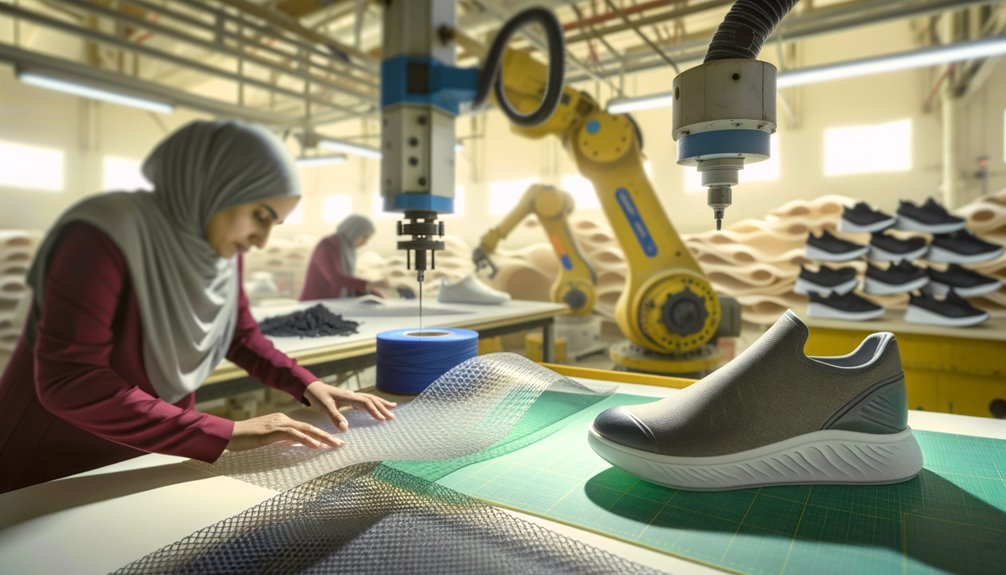
In the ever-evolving world of footwear, something magical happens when innovative materials meet sustainability and durability. Imagine stepping into shoes crafted from recycled rubber—each pair tells a story of industrial scraps transformed to enhance flexibility and durability, all while supporting a circular economy. Apple leather, a 100% vegan alternative, redefines what’s possible by turning food waste into sustainable, durable footwear without toxic tanning. Piñatex, with its biodegradable pineapple leaf fibers, offers a soft yet robust texture, minimizing the environmental impact. Embrace eco-friendly options like vegan cactus leather and Bananatex, which showcase how trendsetters are stepping away from traditional materials. These innovations promise a future where durable footwear doesn’t compromise the planet’s health but instead elevates it.
Techniques Enhancing Longevity
When you slip on a pair of shoes designed with longevity in mind, you’re stepping into a world where craftsmanship meets cutting-edge innovation. High-quality materials like full-grain leather and synthetic alternatives form the backbone, ensuring comfort and durability. Reinforced hand-stitching offers a seam strength that’s second to none, while innovative waterproofing treatments keep moisture at bay.
| Technique | Benefit | Result |
|---|---|---|
| Reinforced Hand-Stitching | Increased seam durability | Long-lasting product |
| Full-Grain Leather | Superior strength | Enhanced longevity |
| Innovative Waterproofing | Moisture resistance | Extended lifespan |
| Pattern Making | Precise fit | Comfort and durability |
With quality assurance processes, including prototype fittings and rigorous inspections, potential weaknesses are identified early, granting you a shoe that’s beautifully enduring.
Sustainable Practices in Shoemaking
Stepping beyond durability, shoemaking evolves with a consciousness for sustainability. You’re invited to explore how sustainable practices redefine footwear, blending ethical production with high-quality materials. Craftsmen, rooted in traditional techniques, embrace environmentally conscious methods:
- Local Sourcing: Using locally sourced, natural materials reduces the carbon footprint and supports community economies.
- Recycled Elements: Incorporating recycled rubber and nylon supports the circular economy, minimizing reliance on virgin resources.
- Innovative Alternatives: Materials like apple leather and Piñatex offer eco-friendly choices without sacrificing durability or style.
These practices highlight a dedication to craftsmanship and small-scale production, ensuring each shoe is a representation of sustainable elegance. By investing in such durable materials, you’re not just buying shoes; you’re supporting a movement for a better planet.
The Role of Technology in Modern Shoemaking

Imagine designing your perfect pair of shoes with pinpoint precision, all thanks to the magic of Computer-Aided Design (CAD) and 3D modeling. These technological marvels don’t just sketch a shoe; they craft it, allowing for rapid prototyping that minimizes waste and maximizes accuracy. Add laser cutting into the mix, and you’ve got a powerhouse trio that guarantees your shoes are not only stylish and comfortable but also durable and eco-conscious.
CAD for Precision Design
In the domain of modern shoemaking, Computer-Aided Design (CAD) technology stands as a pivotal force, revolutionizing how artisans approach precision and creativity. Imagine crafting shoes with intricate designs that boast durability and perfect measurements. With CAD, you can achieve this by digitally sculpting your vision before you even touch the materials. The seamless integration of CAD enables:
- Precision in design: Visualize complex patterns and structures, ensuring your creations fit like a glove.
- Accelerated prototyping: Quickly iterate and refine models, speeding up the journey from concept to reality.
- Enhanced durability: Simulate material properties to make informed decisions about performance.
3D Modeling Innovations
Technology is revolutionizing modern shoemaking through groundbreaking 3D modeling innovations. With 3D modeling technologies, you can craft artisan footwear through precise design iterations, reducing material waste and enhancing accuracy. Computer-Aided Design (CAD) software elevates pattern-making, ensuring quality and fit consistency. Digital prototyping lets you create virtual samples swiftly, testing aesthetics without hefty costs.
Consider the following advantages:
| Feature | Benefit |
|---|---|
| Fitting Simulations | Enhanced comfort and fit |
| Precision Manufacturing | Complex designs achievable |
| Automated Stitching | Consistent quality and detail |
Through fitting simulations, potential wearers virtually try on shoes, offering feedback before production. Precision manufacturing and automated stitching bring intricate designs to life, marrying technology with craftsmanship. This fusion propels shoemaking into a new era of innovation and sustainability.
Laser Cutting Efficiency
A single beam of light can revolutionize how shoes are made, thanks to laser cutting’s unparalleled precision. With laser cutting technology, shoemaking becomes an art of efficiency and accuracy. This method uses focused light beams to slice through various materials, crafting intricate patterns with minimal waste. Integrating computer-aided design (CAD) guarantees high fidelity from digital concept to tangible product, opening doors to complex designs and customizations previously unimaginable. Imagine the possibilities:
- Precision: Achieve tight tolerances for superior fit and finish.
- Efficiency: Streamline production processes, reducing material costs and speeding up cycles.
- Customization: Easily create intricate and unique shoe designs.
This technology marks a new era where precision meets innovation, transforming the shoemaking landscape with each laser cut.
Eco-Friendly Alternatives to Traditional Materials
You’re about to step into the future of fashion with sustainable material innovations that are reshaping footwear. Imagine shoes crafted from recycled rubber, apple leather, and Piñatex, each offering durability without compromising on style or ethics. By embracing these eco-friendly alternatives, you’re not just reducing your carbon footprint; you’re also supporting ethical sourcing practices that protect our planet.
Sustainable Material Innovations
When it comes to crafting durable shoes, stepping into sustainable material innovations isn’t just a trend—it’s a necessity. Embrace eco-friendly options that blend high-quality leathers with durability and flexibility. Imagine the possibilities with:
- Piñatex: This innovative material, derived from pineapple leaf fibers, offers a biodegradable alternative to animal leather.
- Apple Leather: Crafted from upcycled food waste like apple skins, it sidesteps toxic tanning processes, making it both eco-conscious and stylish.
- Recycled Nylon: Through initiatives like the SEAQUAL INITIATIVE, marine plastic waste transforms into lightweight, durable fibers.
Consider vegan cactus leather, with its water-efficient Nopal cactus origin, and industrial scraps like recycled rubber. These sustainable materials not only minimize environmental impact but also push the boundaries of modern footwear design.
Ethical Sourcing Practices
Although the allure of traditional leather might be strong, embracing ethical sourcing practices means diving into a domain where eco-friendly alternatives redefine the footwear industry’s landscape. Imagine shoes crafted from environmentally friendly materials like recycled rubber or apple leather, significantly cutting waste and carbon footprints. Sustainable textiles such as Piñatex and Bananatex offer biodegradable alternatives, reducing long-term environmental impact. The SEAQUAL INITIATIVE’s recycled nylon transforms marine plastic waste into durable options, preserving marine life. Vegan cactus leather, sourced from Nopal, is a water-efficient, sustainable substitute for animal leather. Ethical sourcing ensures fair trade practices, supporting local economies and enhancing the sustainability of handmade footwear.
| Sustainable Textiles | Eco-Friendly Materials |
|---|---|
| Piñatex | Recycled Rubber |
| Bananatex | Apple Leather |
| Recycled Nylon | Vegan Cactus Leather |
| Marine Plastic Waste | Fair Trade Practices |
Meeting Consumer Demands for Responsible Fashion
In a world where fashion’s footprint is under increasing scrutiny, meeting consumer demands for responsible fashion isn’t just a trend—it’s a necessity. You’re part of a movement expecting sustainable fashion to shine. Brands are responding with:
Responsible fashion is a necessity, not just a trend—consumers demand sustainability and transparency.
- Innovative Materials: Recycled rubber and apple leather reduce environmental impact.
- Ethically Sourced Elements: Handmade shoes boast transparency, with artisans using ethically sourced leathers and fabrics.
- Sustainable Production: Small-scale manufacturing and recycled materials lower carbon footprints.
Quality control guarantees durable shoes that align with your values. As consumer demands evolve, transparency and environmental responsibility drive brand loyalty. Embracing these practices not only meets your expectations but also celebrates the artistry of artisan shoes, proving that style and sustainability can walk hand in hand.
Case Studies of Durable Shoe Designs
Two exemplary shoe designs stand out in the domain of durability and sustainability, showcasing what happens when innovation meets craftsmanship. First, a design harnessing full-grain leather elevates both durability and comfort, while hand-stitching techniques guarantee superior wear resistance and flexibility. The incorporation of ergonomic features further enhances comfort by distributing pressure across the foot evenly.
Next, another design exemplifies sustainability by using innovative materials like recycled rubber and Piñatex, proving that shoe production can be both eco-friendly and robust. Advanced manufacturing technologies, including CAD and 3D modeling, contribute to precise pattern making, assuring each pair is perfectly tailored for durability and performance. These case studies highlight how merging traditional craftsmanship with modern technology leads to shoes that endure and excel.
Frequently Asked Questions
How to Make Your Shoes More Durable?
To boost your shoes’ durability, focus on shoe care. Choose waterproofing options, sole reinforcement, and fitting advice. Repair techniques and cleaning tips are essential. Proper storage, insoles choice, and understanding wear patterns enhance longevity despite lifestyle impact.
What Is the Most Durable Material for Shoes?
You’re wondering about the most durable shoe materials. Consider leather alternatives and synthetic materials for water resistance and impact resistance. Rubber soles excel in abrasion resistance. Choose breathable fabrics for comfort. Eco-friendly options balance cost-effectiveness and weight considerations.
Do Handmade Shoes Last Longer?
Handmade shoes, like fine wine, improve with age. You’ll find their handmade quality and craftsmanship benefits enhance shoe longevity. Custom fittings, thoughtful material choices, and artisan traditions guarantee repair techniques and sustainability practices keep them lasting far beyond others.
What Do Shoemakers Use to Make Shoes?
You’re curious about what shoemakers use? They blend leather quality with innovative shoe materials, employ precise stitching methods, and craft diverse sole types. Emphasizing footbed design, water resistance, and eco-friendly practices guarantees durability, easy repair options, and ideal shoe maintenance.