
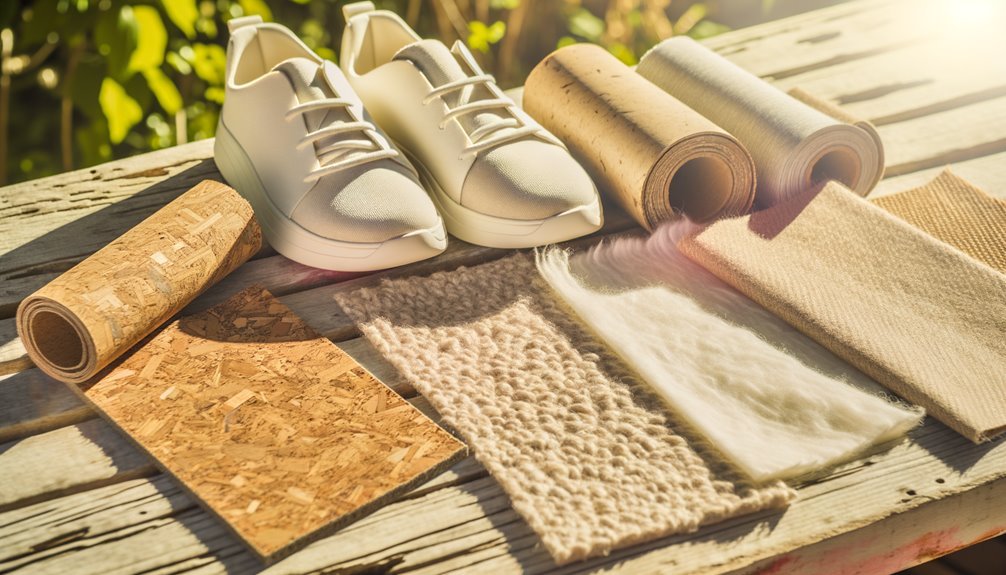
Top Sustainable Materials for Eco-Friendly Sneakers
For eco-friendly sneakers, consider organic cotton that’s grown without pesticides and uses considerably less water. Recycled polyester reduces energy consumption and diverts plastic waste. Natural rubber, harvested sustainably, is both durable and biodegradable. Plant-based leathers from sources like pineapple or apple repurpose agricultural waste. Hemp is robust, biodegradable, and enhances soil health. Choosing these materials reduces environmental impact while ensuring performance. Let’s explore these innovative options further to revolutionize sustainable footwear.
Key Takeaways
- Organic cotton is grown without synthetic pesticides, saving water and promoting biodiversity.
- Recycled polyester converts plastic waste into durable, energy-efficient material.
- Natural rubber is biodegradable and supports fair trade and sustainable land management.
- Plant-based leathers, like Piñatex, offer cruelty-free, biodegradable alternatives to animal leather.
- Hemp grows quickly, requires minimal resources, and is biodegradable, enhancing soil health.
Organic Cotton: A Chemical-Free Choice

When considering sustainable materials for eco-friendly sneakers, organic cotton stands out as a chemical-free choice that aligns with environmental and social responsibility. Unlike conventional cotton, organic cotton is grown without synthetic pesticides or fertilizers, drastically reducing chemical exposure and promoting biodiversity in agricultural ecosystems. By using 91% less water, it considerably lessens the environmental impact on water resources. Organic cotton practices enhance soil health through improved organic matter and natural nutrient cycling, fostering sustainable agriculture. With Global Organic Textile Standard (GOTS) certification, you’re assured that it meets stringent environmental and social criteria throughout the supply chain. Sneakers crafted from organic cotton not only offer eco-friendly benefits but are also softer, more breathable, and provide enhanced comfort, minimizing skin irritations compared to conventional cotton.
Recycled Polyester: Transforming Waste Into Wear
Although the fashion industry is often criticized for its environmental impact, recycled polyester emerges as a beacon of sustainability by transforming post-consumer plastic waste into valuable resources. This eco-friendly material diverts approximately 3 billion plastic bottles from landfills annually, conserving resources and reducing landfill contributions. Its production utilizes up to 70% less energy compared to virgin polyester, thereby minimizing the carbon footprint.
Recycled polyester transforms plastic waste into valuable resources, conserving energy and reducing landfill contributions.
Many brands, like Adidas, are spearheading the use of recycled polyester, committing to fully integrate it into their products by 2024. This material is not only lightweight and water-resistant but also guarantees performance and longevity in sustainable sneakers.
Key Benefits:
- Energy Efficiency: Requires considerably less energy than virgin polyester.
- Versatility: Blends well with other eco-friendly fibers.
- Circular Fashion: Enhances sustainable practices in sneaker design.
Natural Rubber: Sustainable Durability
Recycled polyester isn’t the only sustainable material making waves in the sneaker industry; natural rubber is equally significant for its eco-friendly credentials. Harvested sustainably from Hevea brasiliensis, natural rubber is biodegradable, contrasting with synthetic, petroleum-based alternatives. This environmentally friendly option in sneaker production boasts remarkable durability and elasticity, ensuring superior comfort and extending footwear lifespan, effectively reducing waste. Ethical production is paramount, as natural rubber supports local economies through fair trade, promoting ethical labor. Certifications like FSC and Rainforest Alliance underscore responsible land management and conservation practices. By choosing eco-friendly footwear with sustainable natural rubber, you’re not only investing in durability but also supporting a more ethical and environmentally conscious sneaker industry.
Plant-Based Leathers: Cruelty-Free Alternatives

In the forefront of sustainable fashion, plant-based leathers have emerged as viable, cruelty-free alternatives to traditional animal leathers. These sustainable materials reduce environmental impact through innovative plant-based leathers like Piñatex and apple leather.
- Piñatex: Derived from pineapple leaf fibers, it’s biodegradable and offers a soft texture, enhancing eco-friendly footwear while minimizing waste.
- Apple leather: Repurposing food waste, it avoids toxic traditional tanning processes, promoting a safer choice for consumers and the environment.
- Circular economy: By utilizing agricultural waste, products like cactus and grape leather reduce reliance on petroleum-based materials.
These innovations align with the growing demand for sustainable materials, showcasing how plant-based leathers contribute to a greener future.
Hemp: The Eco-Conscious Fabric
Emerging as a frontrunner in sustainable textiles, hemp offers a compelling eco-conscious alternative for crafting sneakers. This remarkable material is a champion of water conservation, requiring minimal irrigation and no pesticides, unlike conventional fabrics. The rapid growth cycle—reaching maturity in just 3-4 months—enables hemp to yield up to four times more fiber per acre than cotton, enhancing its status among sustainable materials. Known for its durability, hemp’s robust fibers guarantee eco-friendly sneakers withstand wear and tear. As a biodegradable option, hemp reduces environmental impact by decomposing naturally at its lifecycle’s end. In addition, hemp cultivation bolsters soil health and mitigates carbon emissions, contributing positively to ecological balance. Embrace hemp, a truly eco-conscious fabric transforming sneaker production.
Frequently Asked Questions
What Is the Most Eco-Friendly Shoe Material?
You’re evaluating eco-friendliness, and biodegradable materials, recycled plastics, organic cotton, hemp fibers, and natural rubber stand out. Plant-based leathers, eco-friendly dyes, water-based adhesives, sustainable sourcing, and lifecycle assessment further enhance a shoe’s environmental impact.
What Are the Most Sustainable Sneakers?
Sustainable sneakers are rising, projected to grow 6.2% by 2030. Explore brands like Veja and Allbirds for ethical manufacturing, recycled materials usage, and vegan shoe options. They focus on carbon footprint reduction, biodegradable designs, and environmental certifications.
What Material Is More Eco-Friendly?
When evaluating eco-friendliness, consider biodegradable materials like Piñatex or organic cotton. Recycled plastics and natural rubber also excel in carbon footprint reduction. Hemp fibers and sustainable leather from renewable resources highlight eco-conscious brands committed to fair trade production.
Which Shoes Are Most Eco-Friendly?
You’re seeking the most eco-friendly shoes? Focus on sustainable fashion by choosing eco-conscious brands utilizing recycled materials, vegan footwear, and biodegradable options. Prioritize ethical manufacturing, sustainable supply, consumer awareness, and green certifications to minimize your carbon footprint.