
Inside the Step-by-Step Crafting of Classic Shoes
Immerse yourself in the meticulous art of crafting classic shoes. You’ll design with trends and comfort in mind, choosing top-quality leathers. Create a custom foot cast that captures your unique contours, transforming it into a shoe last. Draw precise patterns and stitch the shoe upper with refined techniques. Attach a stylish sole, adding finishing touches like polish or embellishments. These steps perfect the blend of elegance and durability, revealing more about this time-honored craft.
Key Takeaways
- Define shoe type and gather inspiration to guide the design process.
- Create a custom foot cast and transform it into a shoe last.
- Draw and cut precise patterns based on the custom last.
- Assemble the shoe upper with meticulous stitching techniques.
- Attach the sole, add finishing touches, and finalize for a perfect fit.
Conceptualizing the Shoe Design

The art of shoe design begins with a clear vision—one that intricately balances style, function, and innovation. When you’re conceptualizing your next creative endeavor, start by defining the shoe type—be it an oxford, sneaker, or loafer. This decision guides your shoe design process, influencing the materials you choose and the direction of your initial sketches. Gather inspiration from current fashion trends, historical designs, and your own preferences. Sketch the shoe from multiple angles, capturing essential details like shape, proportions, and decorative elements. Don’t forget the functional aspects—comfort, fit, and intended use are vital. Collaborate with experienced shoemakers to refine these concepts, ensuring they’re technically feasible. This groundwork paves the way for a successful design shift into reality.
Selecting Materials for Durability and Comfort
When you’re selecting materials for your classic shoe masterpiece, start with quality leather like full-grain or top-grain, which promises not just durability but an evolving patina that’s always in vogue. Next, weigh your sole options—rubber for its grip and cushioning or leather for its timeless look and breathability. Finally, don’t overlook linings that pamper your feet with comfort, whether it’s soft suede or supple leather, ensuring each step is as stylish as it is comfortable.
Choosing Quality Leather
Glimpse into the world of classic shoe crafting, and you’ll find that choosing quality leather is an art form in itself, pivotal for creating footwear that marries durability with comfort. The shoe-making process begins with selecting full-grain leather, renowned for its superior quality and ability to retain the natural grain, which guarantees both durability and breathability. Embrace the trend of vegetable-tanned leather for its eco-friendly charm and rich patina development, adding unique character to your shoe.
Pay close attention to the leather’s thickness, aiming for 2.0 to 2.5 mm to balance sturdiness and comfort. Ascertain your leather is well-conditioned, water and stain resistant, and always test for flexibility and softness. Quality leather should feel supple, promising comfort without losing its structural integrity.
Evaluating Fabric Choices
As you explore the nuances of classic shoe crafting, once you’ve mastered leather selection, it’s time to contemplate the broader palette of fabric choices. Opt for high-quality leathers like full-grain, ensuring durability and a timeless aesthetic. A leather thickness of 2-3 mm is ideal for uppers, balancing support and elegance. Don’t overlook the importance of a breathable lining; calfskin or moisture-wicking fabrics keep feet comfortable by managing temperature and moisture. While sole material isn’t the focus here, remember that eco-friendly options like vegetable-tanned leather add sustainability without compromising on style. These materials can lend unique textures, enriching the shoe’s design. With these considerations, you’re crafting footwear that’s both stylish and comfortable, a perfect blend of tradition and innovation.
Assessing Sole Materials
How do you choose the perfect sole material for durability and comfort? Start by considering the shoe’s purpose. Rubber soles are your go-to for athletic shoes, offering shock absorption and weather resistance. They’re flexible and provide excellent traction, making them ideal for active lifestyles. Leather soles, on the other hand, are synonymous with formal footwear. They bring breathability and longevity but require careful construction techniques to maintain durability. Think about the sole’s thickness, too—thicker soles offer more cushioning but might compromise flexibility. Pay attention to proper adhesion methods to guarantee a strong bond that withstands wear and tear. Stay trend-aware; EVA foam is buzzing for its lightweight cushioning. Choose wisely, and your shoes will not only last but also keep you comfortable.
Creating a Custom Foot Cast
Crafting a custom foot cast is an intricate dance between art and science, capturing the unique contours of your foot with precision. It’s the cornerstone of custom shoes, guaranteeing the shoe last mirrors your foot’s nuances. Whether using plaster casting or foam impressions, the goal is to capture every curve and arch.
- Unique Shape: Tailor the cast to reflect your foot’s distinctive form.
- Comfortable Environment: Maintain a relaxed setting to guarantee accuracy and ease.
- Material Choice: Select high-quality materials to capture fine details.
- Special Needs: Consider arch support or width modifications for an ideal fit.
- Curing Process: Allow the cast to cure fully before advancing to shoe-making.
This process lays the foundation for a perfect fit, marrying comfort with craftsmanship.
Transforming the Foot Cast Into a Shoe Last
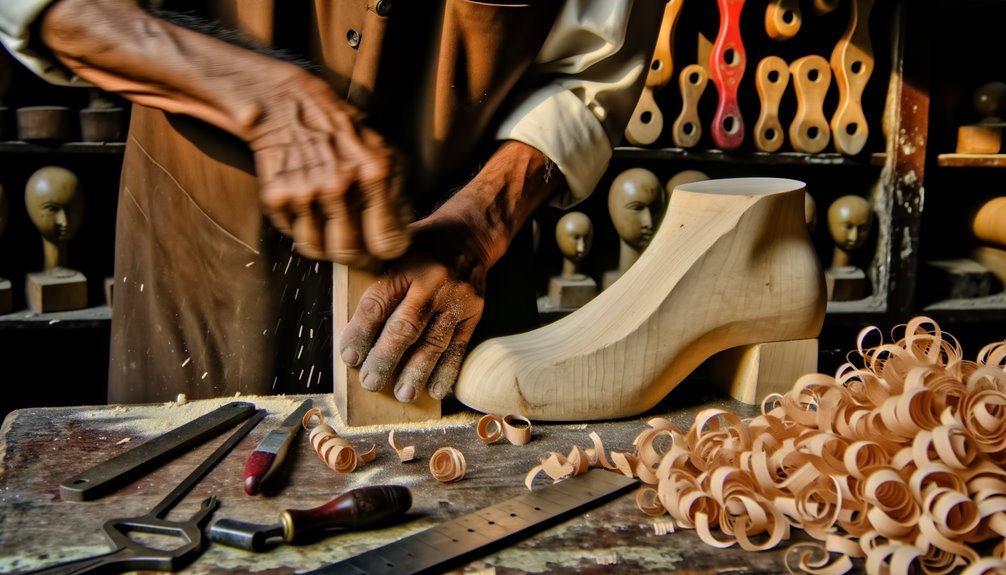
While the art of shoemaking may seem steeped in tradition, transforming a foot cast into a shoe last is where innovation meets meticulous craftsmanship. It’s all about capturing the precise dimensions of the foot cast, shaping materials like wood, plastic, or metal into a mold that mirrors every contour. This shoe last isn’t just a static form; it’s a dynamic blueprint guiding the entire shoemaking process. As you create it, every curve and angle you carve guarantees the finished shoe offers unparalleled comfort and fit. The last becomes the keystone for aligning the upper materials, ensuring the shoe maintains its designed elegance. Plus, a perfectly crafted last influences the aesthetic appeal, making certain the finished shoe stands out in style.
Drawing and Cutting Precise Patterns
You’re stepping into the domain where artistry meets precision: drawing and cutting your shoe patterns. Start by embracing the last as your muse, taking meticulous measurements to guarantee each template piece aligns perfectly, setting the stage for a seamless shoe assembly. With razor-sharp tools in hand, your cuts must be exact, as any deviation could compromise both the fit and the fashion-forward edge of your creation.
Pattern Development Techniques
A successful shoe begins its journey with the meticulous art of pattern development, where precision and creativity intersect. Crafting a pattern for the upper demands accurate measurements, transforming a shoe template into a form that guarantees perfect fit and style. You’ll need to account for seam allowances, typically ranging from 1/4 inch to 1/2 inch, which are crucial for stitching perfection. Cutting leather requires finesse; using sharp tools guarantees clean edges, enhancing the shoe’s overall aesthetic. Before diving into final materials, test your pattern on muslin to make necessary adjustments.
- Begin with a basic shoe template
- Measure foot dimensions: length, width, arch height
- Include seam allowances for stitching ease
- Use sharp tools for cutting leather
- Test patterns on muslin first
Template Accuracy Importance
Crafting precise patterns is the linchpin of successful shoemaking, as the accuracy of your templates directly impacts the shoe’s fit and comfort. When you prioritize template accuracy, each pattern piece aligns perfectly during stitching and assembly, ensuring a flawless fit. Precise patterns minimize material wastage, meaning fewer expensive scraps and more sustainable practices. Leveraging a well-made last, you can tailor designs to the foot’s natural contours, enhancing both aesthetics and functionality. This attention to detail dramatically boosts the shoe’s overall quality, aligning with customer expectations.
| Key Aspects | Benefits | Outcome |
|---|---|---|
| Template Accuracy | Enhanced fit and comfort | Professional finish |
| Precise Patterns | Minimize material wastage | Sustainable shoemaking |
| Stitching and Assembly | Efficient construction | Reduced need for adjustments |
Your commitment to precision crafts timeless classics.
Assembling and Stitching the Shoe Upper
While commencing on the intricate journey of assembling and stitching the shoe upper, precision and artistry intertwine to create a foundation of elegance and strength. You’ll find yourself meticulously aligning leather or fabric pieces, guaranteeing seams are not only secure but also precise to maintain shape and integrity. Techniques like skiving and folding reduce bulk, offering both comfort and aesthetic allure. The order may vary, yet the essence remains—attaching the lining, integrating components like stiffeners, and finally, shaping around a last for a perfect fit. Accurate stitching is paramount, as high-quality threads and consistent lengths guarantee durability and a refined finish.
- Align pieces meticulously
- Secure and precise seams
- Skiving and folding techniques
- Attach lining to upper
- Shape around a last for fit
Attaching the Sole and Adding Finishing Touches
With the shoe upper meticulously crafted, your focus now shifts to attaching the sole and adding those final touches that elevate a shoe from mere function to a statement of style. Attaching the sole requires strong adhesives or precise stitching to guarantee durability. Cutting the sole material to match the upper’s dimensions demands precision fitting, enhancing both aesthetics and comfort. Once secure, your attention turns to finishing touches. Trim any excess material, polish the leather to a sheen, and consider decorative elements like patches or embellishments to infuse your creative flair. Before concluding, perform a final inspection to catch any stitching or bonding imperfections. These steps guarantee the shoe meets the highest quality standards, delivering both style and substance.
Finalizing the Shoe for a Perfect Fit

Assuring a perfect fit is the crowning achievement in shoe crafting, where artistry meets precision. It all begins with the shoe upper, shaped meticulously around the last to hug every curve of your foot. The insole is your hidden ally, selected for both support and comfort, matching the shoe’s design flawlessly. Final adjustments to the heel height and width ascertain the shoe accommodates your unique foot shape, sparing you from future discomfort.
Before the shoe is deemed ready, a thorough inspection is essential.
- Check for imperfections or uneven seams.
- Evaluate the insole’s alignment and cushioning.
- Adjust heel height for balanced posture.
- Test fit on a model for real-world comfort.
- Polish and decorate after inspection.
These steps guarantee a fit that’s both comfortable and stylish.
Frequently Asked Questions
How Are Shoes Made in a Factory Step by Step?
You’ll start with design and material selection, then observe shoe production techniques like Goodyear welting. Factory equipment roles are essential. Labor skills guarantee precision. Quality control measures catch flaws. Don’t forget environmental impact considerations throughout.
How to Make Classic Shoes?
Imagine your shoes as a blank canvas. You’ll choose premium shoe materials, embrace classic designs, master stitching techniques, and select sole types. Explore customization options, and don’t forget care tips to keep them timelessly stylish.
What Is the Sequence of Steps in Shoe Manufacturing?
You’ll start with design techniques, move to shoe materials and precise stitching methods. Next, focus on sole construction, ensuring durability. Finally, apply finishing touches and conduct quality control checks. Voilà, you’ve crafted a trend-aware masterpiece!
How Were Shoes Made in the Olden Days?
You’re exploring the rich history of shoe-making, where handmade techniques and traditional materials showcased artisan craftsmanship. Footwear styles evolved, reflecting cultural significance. This historical evolution in shoe-making highlighted unique, durable designs crafted with technical precision and creative flair.