Comparing Shoe Construction: Traditional Vs Modern Methods
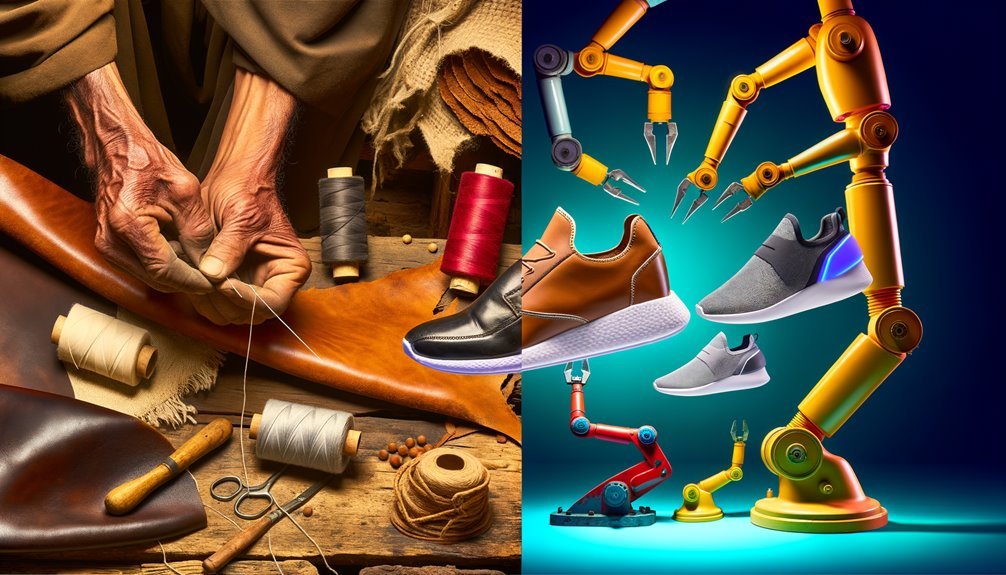
Traditional shoe construction techniques, like Goodyear and hand-welted methods, emphasize durability and repairability, providing longer-lasting footwear. These methods allow for multiple resoles, thereby promoting sustainability. In contrast, modern constructions, particularly cemented shoes, prioritize cost efficiency and rapid assembly but often lack longevity and resolability, leading to a disposable culture. Understanding these differences is essential for choosing shoes that meet your requirements. Explore further to discover the implications for your specific lifestyle and preferences.
Key Takeaways
- Traditional methods like Goodyear and hand-welted construction offer superior durability and repairability compared to modern cemented techniques.
- Modern cemented construction is cost-effective and quick to produce but sacrifices long-term durability and repairability.
- Blake stitch construction provides a sleek profile but is less durable than traditional Goodyear welted shoes.
- Traditional constructions support resoling, enhancing sustainability, while modern methods often contribute to a disposable culture.
- Lifestyle needs, such as durability and waterproofing, greatly influence the choice between traditional and modern shoe constructions.
Understanding Shoe Construction

When delving into shoe construction, it is crucial to grasp the nuances of various techniques that define both the quality and lifespan of footwear. Traditional shoe construction methods like Goodyear welted shoes emphasize durability and repairability, making them ideal for those seeking longevity. The Goodyear method involves stitching a welt to both the upper and insole, enhancing water resistance. On the other hand, Blake stitch construction offers a sleek profile, attaching the upper directly to the insole and outsole but sacrificing some water resistance. Modern methods, such as cemented shoes, dominate the market due to quick assembly, albeit at the cost of durability. Emerging Blake Rapid construction merges traditional and modern methods, aiming for Goodyear’s durability with Blake’s aesthetics.
The Importance of Shoe Construction
When you’re evaluating shoe construction, it’s essential to take into account how techniques like Goodyear welt enhance durability and longevity, unlike cemented methods that may lead to premature disposal. Craftsmanship is a key quality indicator; superior construction methods not only bolster aesthetics but also provide repairability and resole options, extending the life of your footwear. By understanding these factors, you can make informed decisions that balance initial investment with long-term value.
Durability and Longevity Factors
Although often overlooked, the construction of a shoe plays an essential role in its durability and longevity, directly impacting its ability to withstand wear over time. Traditional methods like the Goodyear welted technique provide superior durability and longevity. This construction allows shoes to be easily resoled, reinforcing their lifespan. In contrast, modern cemented constructions lack this adaptability.
- Goodyear welted: Offers unparalleled durability through a stitched bond, guaranteeing resilience and flexibility.
- Hand-welted: Known for meticulous craftsmanship and a custom fit, promoting longevity and comfort.
- Storm-welted construction: Enhances waterproofing, vital for harsh conditions, therefore extending the shoe’s life.
Investing in high-quality constructions like Blake Rapid guarantees footwear remains both functional and aesthetically pleasing for years.
Craftsmanship and Quality Indicators
Craftsmanship serves as the foundation of shoe quality, where attention to detail and traditional construction methods distinguish superior footwear from the mass-produced. The Goodyear welt, a hallmark of premium footwear, epitomizes this excellence with its intricate stitching that enhances durability and allows for multiple resole opportunities. Compared to modern construction methods, such as cemented construction, which dominate 95% of the market, traditional methods like the Blake stitch offer superior longevity. These techniques not only prolong a shoe’s lifespan but also reflect the labor-intensive craftsmanship involved. Investing in shoes constructed with these methods guarantees durability and substantial long-term savings. The presence of a welt signals high-quality craftsmanship, emphasizing the significance of traditional shoe construction in achieving footwear that withstands the test of time.
Repairability and Resole Options
While the choice of shoe construction greatly impacts repairability and resole options, understanding these differences can guide you in making informed decisions about your footwear investments. Traditional methods like Goodyear welt and storm-welted construction allow for multiple resoles without compromising the upper, enhancing durability and sustainability.
- Goodyear welt: Easily resoled multiple times, offers longevity.
- Blake-stitched: Can be resoled but needs specialized machinery, less water-resistant.
- Cemented construction: Lacks resolability, less sustainable, more disposable.
Hand-welted options also shine in repairability with skilled artisans maintaining both integrity and aesthetics. Meanwhile, cemented construction, prevalent in 95% of global production, often sacrifices durability for cost, lacking the sustainability of traditional methods. Choose wisely for long-term value.
Goodyear-Welted Construction
Developed in the mid-1800s, Goodyear-welted construction revolutionized the footwear industry by introducing a robust yet flexible method of shoe assembly. This method involves the precise stitching of a leather strip, known as the “welt,” to both the upper and insole, enhancing durability and resoling potential. The unique stitching technique guarantees a strong bond while maintaining flexibility, allowing the shoe to adapt to your movements. This process also makes the shoes more water-resistant, ideal for various weather conditions. Despite being labor-intensive and costly, it’s favored by high-quality heritage and outdoor brands like Red Wing and Alden.
| Feature | Benefit | Brand Example |
|---|---|---|
| Goodyear welt construction | Durable and resolable | Red Wing |
| Water-resistant | Suitable for all weather | Alden |
| Labor-intensive process | High quality shoes | Heritage brands |
Hand-Welted Construction

When you’re considering the pinnacle of artisanal footwear, hand-welted construction stands out for its labor-intensive artistic craftsmanship, where each stitch is meticulously executed by skilled artisans. This technique not only enhances bonding strength, ensuring the shoe’s durability and flexibility, but also achieves a sleek silhouette thanks to the rib carved directly into the insole’s leather. Such craftsmanship demands a higher price point, yet it’s an investment in longevity and elegance, with shoes crafted to endure decades of wear.
Labor-Intensive Artistic Craftsmanship
Even though modern shoe manufacturing has embraced automation, hand-welted construction remains a demonstration of labor-intensive artistic craftsmanship in the footwear industry. This method involves skilled artisans manually stitching the upper, insole, and outsole, creating a durable and high-quality masterpiece. You can appreciate the intricate stitching, which speaks to the artisan’s dedication to excellence. The labor-intensive process not only results in a shoe that’s built to last but also showcases an artistic flair rarely seen in mass-produced footwear.
- Rich leather is used for creating a luxurious feel.
- Intricate stitching highlights the meticulous attention to detail.
- Special shoe creams are needed to maintain their unique luster.
Enhanced Bonding Strength Benefits
Although modern technology has revolutionized shoe manufacturing, the hand-welted construction method continues to be revered for its enhanced bonding strength benefits. This traditional method involves directly stitching the welt to the insole’s leather, resulting in superior bonding strength. It demands meticulous craftsmanship and precision, ensuring a durable shoe construction that withstands the test of time. Unlike Goodyear-welted techniques, hand-welted shoes achieve a closer-fitting welt, contributing to an elegant silhouette and maintaining flexibility in movement. The precision of hand stitching and high-quality materials employed elevate these shoes to a high-end status. Particularly favored in bespoke and high-end ready-to-wear footwear, the hand-welted method is renowned for its superior bonding capabilities, delivering a refined aesthetic and unmatched durability.
Sleek Silhouette Achievements
Building on the enhanced bonding strength benefits of hand-welted construction, the method’s contribution to achieving a sleek silhouette in footwear is a demonstration of its craftsmanship. By hand-stitching the welt to both the upper and insole, artisans create shoes that boast:
- Elegant design: A narrower waist and close-fitting welt guarantee a sophisticated profile.
- Bespoke appeal: Tailored precision caters to high-end fashion and bespoke markets.
- Longevity: The ability to resole preserves the sleek silhouette over time.
This traditional technique, with its direct rib carving into the insole leather, enhances bond strength while delivering a refined appearance. Brands like Vass and Antonio Meccariello exemplify how hand-welted construction blends traditional techniques with modern design, capturing the essence of craftsmanship.
Storm-Welted / Norwegian-Welted Construction
Storm-welted construction, often synonymous with Norwegian-welted, is a sophisticated technique that enhances both the durability and water resistance of footwear. This construction method involves stitching the welt on the outside of the shoe, creating storm welted shoes that effectively reduce water penetration. Ideal for heavy boots, it provides a waterproof shoe solution that is durable and can withstand harsh outdoor conditions, especially in fall and winter. The robust solution offered by this construction allows for easy resoling and repairs, extending the shoe’s lifespan. The craftsmanship involved is evident in the visible stitching, which not only adds aesthetic value but also underscores the technical skill required. This method guarantees shoes remain practical with less frequent maintenance in varying weather conditions.
Cemented Construction
In the domain of adhesive-based shoe assembly, cemented construction dominates due to its efficiency in mass production, accounting for 95% of global output. You’ll find that this method relies heavily on industrial adhesives to bond the upper to the sole, bypassing the need for stitching and allowing for speedier production cycles. However, this efficiency comes with challenges, as the shoes’ limited lifespan and lack of repairability present significant drawbacks, particularly in the context of sustainability and the environmental impact of fast fashion.
Adhesive-Based Shoe Assembly
When exploring the domain of modern footwear production, adhesive-based shoe assembly, commonly known as cemented construction, stands out due to its overwhelming prevalence, accounting for about 95% of all shoes produced globally. This method uses industrial adhesive to bond the upper to the sole, offering a lightweight design ideal for fast fashion. However, the adhesive’s integrity can weaken, compromising durability, particularly with moisture exposure.
- Lightweight design: Lack of stitching makes shoes feel airy.
- Disposable nature: Limited repair options result in quick replacement.
- Fast fashion allure: Prioritizes style and affordability over longevity.
While cemented construction excels in cost-effectiveness and rapid production, it’s less robust than traditional methods. Once worn, the soles usually can’t be replaced, favoring a disposable approach over sustainable repair.
Mass Production Challenges
Having established the limitations of adhesive-based shoe assembly, it’s important to address the mass production hurdles inherent in this method. Cemented shoe production dominates the industry, accounting for 95% of global output. This method uses industrial adhesives to bond the upper to the sole, favoring speed and cost-efficiency over durability. Unlike stitched construction, cemented shoes struggle with longevity due to their susceptibility to moisture and flexing, which can degrade the adhesive over time. Repairability is a considerable challenge; once the sole wears out, it’s typically irreplaceable, greatly limiting the shoe’s lifespan. While this method meets fast fashion demands, it results in disposable shoes with less emphasis on repair and longevity, contrasting sharply with more durable, stitch-based alternatives.
Blake-Stitched Construction
Blake-stitched construction, a hallmark of sleek and lightweight shoe design, directly attaches the upper to the insole and outsole using a single stitch, thereby eliminating the need for a welt. This method, pioneered by Lyman Reed Blake, results in shoes that are both flexible and comfortable from the get-go. However, while you’ll enjoy a streamlined aesthetic, the lack of a welt means these shoes are less water-resistant, so be cautious in wet environments.
- Flexibility: Feel the ease of movement with every step.
- Streamlined Design: Appreciate the sleek, welt-less silhouette.
- Resoling Complexity: Understand that specialized machinery is required.
Despite the challenges in resoling, Blake-stitched shoes remain a favorite for those valuing style and comfort immediately upon wear.
Blake Rapid Construction
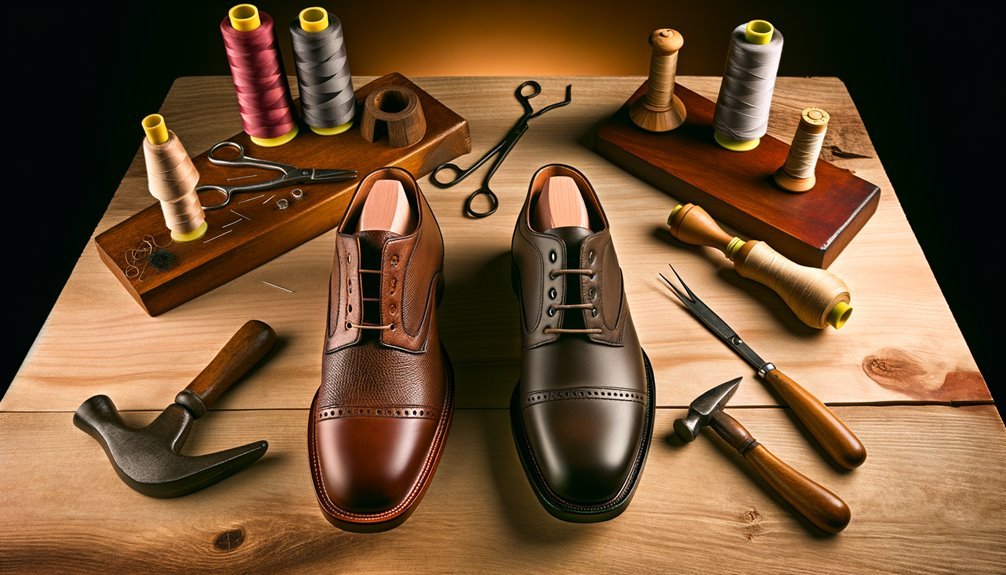
While Blake-stitched shoes offer immediate comfort and a sleek look, enthusiasts seeking enhanced durability and resistance to the elements might find Blake Rapid Construction intriguing. This method of shoe construction is a hybrid, merging the best of Blake Stitch and Goodyear welt techniques, resulting in Blake Rapid shoes that are both durable and flexible. By stitching the midsole directly to the outsole, this design facilitates easier resoling without compromising structural integrity. Improved waterproofing makes these shoes suitable for diverse weather conditions. Compared to traditional Blake construction, they present a wider, chunkier appearance, aligning with modern fashion trends. Despite these enhancements, they retain the comfort and sleek aesthetics desirable for everyday wear, providing a versatile option for the discerning shoe aficionado.
Stitchdown Construction
Although known for its distinctive aesthetic, stitchdown construction provides notable advantages regarding flexibility and comfort. By flanging the upper outwards and stitching it directly to the midsole and outsole, this method guarantees exceptional flexibility and comfort from the first wear, reducing the usual break-in period. The visible stitching not only contributes to its unique look but also enhances repairability, allowing cobblers easy access to repairs.
- Flexibility: Immediate comfort, ideal for daily wear
- Repairability: Direct access to stitching simplifies repairs
- Durability: Perfect for rugged work boots in harsh environments
However, it’s crucial to evaluate the cons. Stitchdown construction is generally less water-resistant due to its external stitching design, making it less suited for wet conditions compared to other methods.
Norvegese Construction
Stitchdown construction offers flexibility and comfort, but when it comes to durability and waterproofing, Norvegese construction stands out as a superior choice. This method, also known as Norwegian welted construction, involves stitching the upper part directly to a leather welt that folds outwards. The two exterior stitches are not just for aesthetics; they connect the upper, midsole, and outsole, reinforcing the shoe’s structure and enhancing waterproofing. Originally from Scandinavia, Norvegese construction is ideal for rugged outdoor conditions, offering a robust build suited for adverse weather. However, this labor-intensive process demands skilled craftsmanship, contributing to a higher price point. Despite their bulkier appearance, shoes constructed this way combine style with functionality, making them a staple in high-performance footwear.
Choosing the Right Shoe Construction for Your Needs
When selecting the ideal shoe construction, have you considered how different methods align with your specific needs? Traditional methods like the Goodyear welt are renowned for their durability and ability to be resoled, making them an excellent choice for a long-term footwear investment. On the other hand, Blake construction offers a more formal, streamlined appearance, prioritizing comfort but sacrificing some waterproofing.
Consider shoe construction methods that match your lifestyle: Goodyear for durability, Blake for sleekness, and Storm-Welted for waterproofing.
- Goodyear Welt: Ideal for those prioritizing durable and resole-friendly shoes suitable for various environments.
- Blake Construction: Perfect for formal occasions where sleek aesthetics and comfort are key, though less suited for wet conditions.
- Storm-Welted: Combines traditional methods for enhanced waterproofing, suitable for outdoor and wet environments.
Understanding your lifestyle needs will guide you in selecting the most suitable shoe construction.
Frequently Asked Questions
What Are the Different Types of Shoe Construction?
Imagine shoe construction as a symphony, where sneaker construction harmonizes with sandal types, boot designs, and formal shoes. Athletic footwear and summer styles blend with winter footwear, eco-friendly shoes, and custom footwear, each offering unique craftsmanship and functionality.
What Is the Difference Between Blake Stitch and Blake Rapid?
You’ll notice Blake stitch offers flexibility and lightweight advantages, but lacks durability against water. Blake Rapid improves efficiency and comfort, with robust applications and easier maintenance. It incorporates additional materials, enhancing production and durability without sacrificing style.
What Is the Difference Between Veldtschoen and Goodyear Welt?
“A stitch in time saves nine.” In veldtschoen vs. Goodyear welt, veldtschoen offers superior flexibility and casual aesthetics but lesser durability. Goodyear welt benefits include longevity and refined appearance, showcasing footwear craftsmanship techniques rooted in shoe construction history.
What Is the Bologna Construction Technique?
With the Bologna technique, you’ll find a manufacturing process emphasizing shoe flexibility and comfort. The upper materials are crafted into a tubular shape, enhancing design aesthetics. While craftsmanship skills elevate quality, durability concerns and cost implications remain evident.