
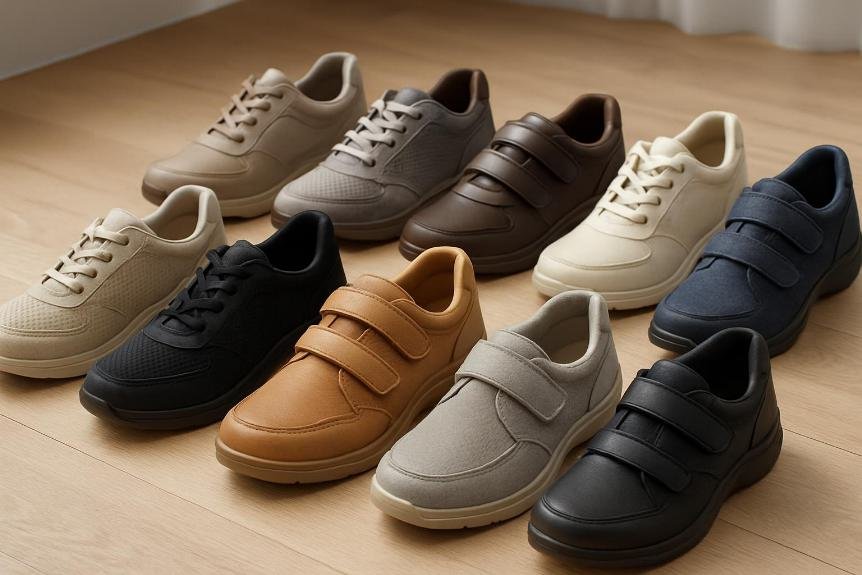
10 Best Shoes for Deformed Feet in 2025 – Comfort and Support Reviewed
You’ll want shoes with a wide toe box, adjustable straps, and firm arch support to keep deformed feet comfortable and pain-free. Options like Men Women Diabetic Extra Wide Open Toe Adjustable Sandals or FitVille Extra Wide Walking Shoes offer breathability and cushioning, while brands like QAUPPE and JIONS provide versatile styles for swelling and foot pain. Lightweight soles with non-slip traction are key, as are customizable designs like Brace Direct orthopedic shoes. Keep exploring to find shoes perfectly suited to your needs.
Key Takeaways
- Shoes with extra-wide toe boxes and adjustable straps accommodate deformed or swollen feet, enhancing comfort and preventing further damage.
- Breathable, lightweight materials improve air circulation and reduce moisture, minimizing irritation and foot odor during extended wear.
- Arch support in shoes promotes proper foot alignment, alleviating pain from deformities and related conditions like plantar fasciitis.
- Non-slip rubber soles provide essential traction and stability, reducing the risk of falls for individuals with compromised mobility.
- Popular models include diabetic-friendly sandals, adjustable wide shoes, and cushioned walking sneakers designed for foot deformities and swelling.
Men Women Diabetic Extra Wide Open Toe Adjustable Sandals
No products found.
If you’re looking for shoes that truly accommodate deformed or swollen feet, these Men Women Diabetic Extra Wide Open Toe Adjustable Sandals are a top choice. Their breathable fabric keeps feet dry and comfy, while the magic sticker straps make adjusting a breeze. I appreciate the extra-wide design that guarantees no squeezing, perfect for diabetic or arthritic feet. Getting them on and off is effortless thanks to the wide opening. Plus, the non-slip rubber sole keeps me steady on various surfaces. Whether you have swollen feet or conditions like hallux valgus, these sandals offer the comfort and support you need.
Best For: Individuals with diabetic, arthritic, swollen, or deformed feet seeking comfortable, adjustable, and safe footwear.
Pros:
- Breathable fabric keeps feet dry and comfortable.
- Adjustable magic sticker straps allow for easy fitting and removal.
- Non-slip, wear-resistant rubber sole ensures safety on various surfaces.
Cons:
- May not be suitable for users looking for more formal or stylish footwear.
- Open toe design might not provide enough protection in colder weather.
- Extra-wide sizing might feel bulky for those with narrow feet.
QAUPPE Womens Walking Shoes with Arch Support for Foot Pain Relief
No products found.
When I look for shoes to ease foot pain, the QAUPPE Womens Walking Shoes with Arch Support stand out for their impressive comfort and relief, especially for those dealing with arthritis or plantar fasciitis. Many users report reduced discomfort and lasting support throughout the day. They fit true to size for most, even accommodating wider feet, though a few found sizing tricky. While some mention durability concerns and challenges cleaning the mesh upper, these shoes remain versatile and affordable for walking, work, or gym use. If you want stylish arch support without breaking the bank, QAUPPE is worth considering.
Best For: Individuals seeking affordable, comfortable walking shoes with arch support to relieve foot pain from conditions like arthritis or plantar fasciitis.
Pros:
- Provides significant pain relief and lasting comfort throughout the day.
- True to size for most users and accommodates wider feet comfortably.
- Versatile for various activities including walking, work, and gym use with a stylish design.
Cons:
- Some users report sizing inconsistencies, requiring careful selection.
- Durability concerns with reports of wear and rips within months.
- Difficulties cleaning the mesh upper material, affecting maintenance.
JIONS Adjustable Wide Shoes for Swollen Feet and Diabetic Edema (Unisex)
No products found.
Who struggles with swollen feet or diabetic edema and needs shoes that adjust easily throughout the day? JIONS Adjustable Wide Shoes are a game-changer. These unisex shoes feature Velcro straps that let you customize fit as swelling fluctuates, making them perfect for swollen legs, ankles, or toes. I appreciate their sturdy soles and lightweight design—ideal for daily wear, indoors or out. Customers praise their warmth, traction, and comfort, especially compared to pricey custom shoes. Some sizing issues exist, but the overall value and improved mobility they offer are undeniable. If you seek reliable support and comfort, these shoes deserve your attention.
Best For: Individuals with swollen feet, diabetic edema, or other foot swelling conditions who need adjustable, comfortable, and supportive shoes for daily indoor and outdoor use.
Pros:
- Adjustable Velcro straps provide customizable fit for fluctuating swelling.
- Lightweight with sturdy soles offering good traction and warmth.
- Affordable alternative to expensive custom medical shoes, improving mobility and comfort.
Cons:
- Some users report sizing inconsistencies leading to returns or discomfort.
- Initial looseness in fit for certain customers.
- Occasional issues with incorrect items being shipped, requiring refunds or exchanges.
FitVille Extra Wide Walking Shoes for Men with Arch and Heel Pain Relief
No products found.
I’ve found that FitVille Extra Wide Walking Shoes are perfect for men dealing with arch and heel pain, especially those with flat feet or arthritis in the big toe. The extra wide toe box and cushioned insole provide great comfort, even with thick socks. While the arch support might feel lacking initially, swapping the insole for a custom one improves fit considerably. Some users note the heel fit is a bit loose, but overall, these shoes offer solid support and comfort. Customer service is responsive, and many stay loyal due to quality and satisfaction despite minor sizing quirks.
Best For: Men with arch and heel pain, especially those with flat feet or arthritis in the big toe, seeking extra wide, comfortable walking shoes with customizable support.
Pros:
- Extra wide toe box and cushioned insole provide excellent comfort, even with thick socks.
- Customizable arch support by swapping out the insole enhances fit and comfort.
- Responsive customer service with positive return and refund experiences.
Cons:
- Arch support may feel insufficient without a custom insole.
- Heel fit can be loose for some users.
- Sizing may vary compared to other brands, causing occasional fit inconsistencies.
DOUSSPRT Womens Casual Walking Shoes Slip On Sneakers
No products found.
If you struggle with foot discomfort but need a lightweight, breathable shoe that fits snugly and adapts over time, the DOUSSPRT Womens Casual Walking Shoes Slip On Sneakers might just be your go-to option. I found them incredibly comfortable for all-day wear, feeling like walking on clouds once broken in. The breathable fabric keeps feet cool, and the slip-on design makes them easy to wear. Though some packaging issues can cause crushing on arrival, the shoes offer excellent value around $20. Just watch for a slight dip near the toes, which might affect stability if you have knee concerns.
Best For: Individuals seeking affordable, lightweight, and breathable slip-on walking shoes that provide comfort for all-day wear and casual use.
Pros:
- Extremely comfortable with a cloud-like feel once broken in.
- Breathable materials and lightweight design enhance all-day wearability.
- Affordable price point offers excellent value and encourages repeat purchases.
Cons:
- Packaging issues can cause crushing at the toe and heel upon arrival.
- Slight dip sensation near the ball of the foot may affect stability, especially for those with knee problems.
- Some users may find initial snug fit requires a break-in period.
Womens Comfortable Wide Diabetic Walking Shoes
No products found.
Finding shoes that truly accommodate wide, sensitive feet can feel like searching for a needle in a haystack. Womens Comfortable Wide Diabetic Walking Shoes stood out to me because they’re lightweight, roomy, and perfect for hammertoes or other foot issues. The Velcro straps make slipping them on effortless, especially if you have limited hand mobility. They’re great for casual wear and short walks, but I’d be cautious about using them for long distances due to mixed support reviews. Plus, they’re washable and come in various colors, though sizing can be a bit inconsistent, so order carefully.
Best For: Individuals with wide, sensitive, or diabetic feet seeking comfortable, easy-to-wear walking shoes with adjustable straps and washable features.
Pros:
- Lightweight and roomy, ideal for hammertoes and other foot issues.
- Velcro straps allow for easy on/off, especially helpful for limited hand mobility.
- Washable design with multiple color options for personal style preferences.
Cons:
- Mixed reviews on support, may not be suitable for long-distance walking.
- Sizing can be inconsistent, requiring careful selection.
- Less cushioning compared to some other walking shoes, potentially limiting comfort for extended use.
Corrective Insoles for Supination & Over-Pronation, Orthotic Heel Wedge Inserts (Black-3 Layers, L)
No products found.
When you struggle with supination or over-pronation, the BIGGCOOL corrective insoles stand out as a solid solution because they target pain in your knees, ankles, and back while improving foot alignment. These insoles feature medical-grade PU gel and a honeycomb cloth surface that absorbs sweat and keeps your feet from slipping. I appreciate the adjustable heel wedge inserts, letting me customize support for my specific needs. The shallow heel wedge cup enhances stability, which really helped reduce my knee pain. While some users mention durability concerns, the comfort and alignment benefits make these insoles worth trying.
Best For: individuals experiencing pain from supination or over-pronation seeking customizable, supportive insoles to improve foot alignment and reduce knee, ankle, and back discomfort.
Pros:
- Customizable adjustable heel wedge inserts for personalized support.
- Made of medical-grade PU gel with a sweat-absorbing honeycomb cloth surface.
- Designed to enhance stability and reduce pain in knees, ankles, and lower back.
Cons:
- Some users report concerns about durability over time.
- Potential for insoles to slide inside shoes for certain foot types.
- Opened products are not accepted for return, limiting return options.
Feethit Womens Lightweight Breathable Running Shoes
No products found.
I appreciate how Feethit Womens Lightweight Breathable Running Shoes offer exceptional comfort for those who spend long hours on their feet, especially if you struggle with deformed feet. They’re lightweight, soft, and have a roomy toe box that eases pressure, although wider options would be ideal. The slip-on design with adjustable drawstrings guarantees a secure fit, and I love the variety of colors available. While some users noted minor sizing issues and occasional discomfort at seams, their durability over two years impressed me. Overall, these shoes balance style, comfort, and support, making them a solid choice for daily wear.
Best For: Individuals seeking lightweight, comfortable, and stylish shoes for long hours of wear, especially those needing extra toe room or dealing with foot discomfort.
Pros:
- Soft, breathable, and lightweight with a roomy toe box for enhanced comfort.
- Slip-on design with adjustable drawstrings ensures a secure, customizable fit.
- Durable and retains comfort and appearance even after extensive use over two years.
Cons:
- Limited width options may not accommodate those needing wider shoes.
- Minor sizing inconsistencies reported, including occasional receipt of incorrect sizes.
- Some users experienced discomfort from seams after short periods of wear.
Brace Direct Post-Op Adjustable Orthopedic Walking Shoe for Women (US Size 6.5-8.5)
No products found.
If you’re recovering from foot surgery or dealing with broken toes or bunions, the Brace Direct Post-Op Adjustable Orthopedic Walking Shoe for Women (US Size 6.5-8.5) offers a standout solution. Its square toe box protects swollen or bandaged toes, while adjustable hook-and-loop straps guarantee a comfortable fit as swelling changes. The rocker-bottom sole promotes a natural gait, easing foot and ankle strain. Though some users found the fit smaller than expected and noted sole durability issues, many report improved mobility and comfort. Just be cautious on slippery surfaces, but overall, it’s a solid choice for recovery.
Best For: Women recovering from foot surgery, broken toes, bunions, or other foot injuries who need an adjustable, supportive, and comfortable post-op walking shoe.
Pros:
- Adjustable hook-and-loop straps accommodate swelling changes for a customized fit.
- Rocker-bottom sole promotes a natural gait and reduces foot and ankle strain.
- Square toe box protects swollen or bandaged toes and allows good airflow.
Cons:
- May fit smaller than other brands, so sizing up is often recommended.
- Sole durability issues reported after several weeks of use.
- Hard plastic sole can be slippery on certain surfaces, requiring caution.
Hike Barefoot Shoes for Women and Men (Unisex)
No products found.
You’ll appreciate Hike Barefoot Shoes if you need footwear that feels almost like going barefoot, especially with wide or deformed feet. They’re lightweight, super comfortable, and feature elastic laces that keep the toe box roomy. I found them true to size, though going half a size up gives extra space. While they’re great for casual wear and walking on uneven surfaces, they’re not ideal for hiking or heavy-duty use. They’ve helped relieve foot pain like plantar fasciitis and work well for people with diabetes. Plus, their unique drawstring system makes putting them on a breeze.
Best For: Individuals seeking lightweight, comfortable barefoot-style shoes with a roomy toe box, especially those with wide or sensitive feet, foot pain, or diabetes.
Pros:
- Extremely comfortable and lightweight, mimicking the barefoot experience.
- Elastic laces and roomy toe box accommodate wide or deformed feet.
- Helpful for relieving foot pain such as plantar fasciitis and suitable for uneven surfaces.
Cons:
- Not suitable for hiking, heavy-duty use, or rocky terrain.
- Thin soles offer limited support and protection.
- Some minor quality issues and initial odor reported by users.
Factors to Consider When Choosing Shoes for Deformed Feet
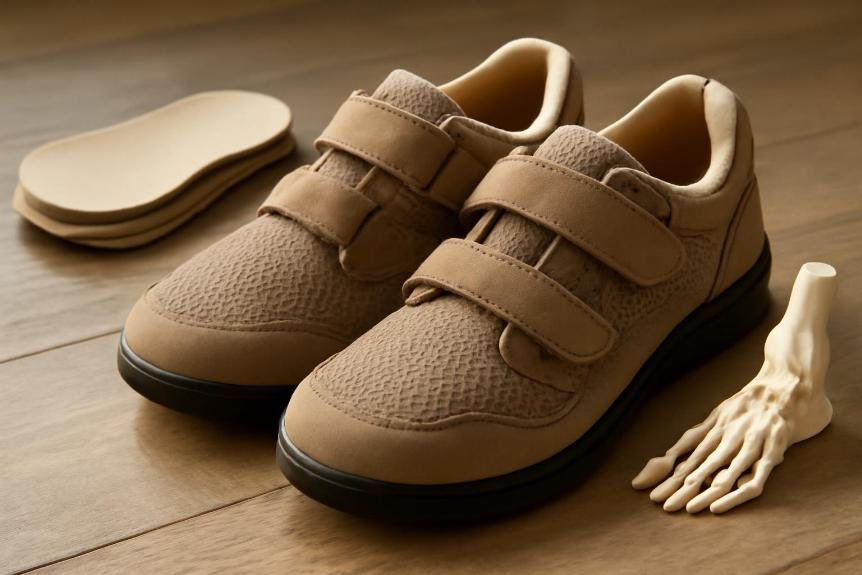
When choosing shoes for deformed feet, you need to focus on a proper fit and adjustable closures to guarantee comfort throughout the day. Look for a wide toe box and breathable materials to prevent irritation and allow your feet to breathe. Don’t forget the importance of good arch support to help maintain balance and reduce pain.
Proper Fit Importance
Because proper fit directly impacts comfort and foot health, choosing shoes that accommodate your deformed feet is essential. Shoes that are too tight can worsen bunions or hammertoes, causing pain and irritation. On the other hand, shoes that are too loose may lead to instability and make walking difficult. You need shoes that provide ample toe space, allowing your toes to move freely without pressure. This helps reduce the risk of further deformities or discomfort. Keep in mind that your feet can change shape or size over time, so regularly checking the fit is important. Selecting shoes with features that adapt to your foot’s needs guarantees you avoid unnecessary pain and support your overall foot health effectively.
Adjustable Closures Benefits
Although finding shoes that fit deformed feet can be challenging, adjustable closures offer a practical solution by allowing you to customize the fit throughout the day. Velcro straps and similar closures adapt to changes in your foot size, especially when swelling occurs, providing consistent comfort and support. They also help prevent pressure points and reduce discomfort by letting you easily adjust tightness. If you have limited hand mobility or are recovering from surgery, adjustable closures make putting on and taking off shoes simpler without needing assistance. This feature enhances the shoe’s versatility, letting you wear them comfortably during casual outings or medical appointments without sacrificing style. Choosing shoes with adjustable closures guarantees you get both ease of use and a secure, personalized fit every time.
Wide Toe Box
Adjustable closures help you achieve a customized fit, but the space inside the shoe matters just as much. A wide toe box is essential when choosing shoes for deformed feet because it reduces pressure on bunions, hammertoes, and other abnormalities. This extra room lets your toes splay naturally, improving balance and mobility. Research shows that shoes with a wider toe area can ease pain and discomfort, enhancing your overall quality of life. Plus, a wide toe box minimizes friction and irritation, preventing further deformity and complications. Many people with foot deformities notice a significant drop in discomfort and a boost in satisfaction when wearing shoes designed with this feature. Prioritizing a wide toe box guarantees your feet get the comfort and support they truly need.
Breathable Materials Advantage
Breathable materials play an essential role in keeping your feet comfortable when you have deformed feet. They improve air circulation, helping to keep your feet dry and reduce moisture buildup that can cause discomfort or skin problems. Shoes made with mesh fabrics or similar breathable materials also cut down on foot odor, making them ideal for extended wear. Their lightweight nature boosts overall comfort, lessening fatigue and enhancing mobility. Breathable shoes regulate temperature well, preventing your feet from overheating—a vital benefit if you have reduced blood circulation. Additionally, these materials often allow flexible shoe construction, which adapts to your foot’s unique shape and supports natural movement. Choosing shoes with breathable materials guarantees you stay comfortable and protected throughout the day.
Arch Support Necessity
When selecting shoes for deformed feet, you need to prioritize arch support because it promotes proper foot alignment and reduces strain on muscles and ligaments. Proper arch support evenly distributes your body weight, easing pain from conditions like plantar fasciitis and flat feet. This support also enhances your balance and stability, which is vital if your mobility is compromised. Shoes lacking adequate arch support can cause problems in your knees, hips, and lower back due to compensatory movements. To get the best fit, consider shoes that allow for custom orthotic insoles, which provide personalized support by matching your foot’s unique contours and pressure points. Choosing the right arch support will greatly improve your comfort and overall foot health.
Non-Slip Sole Features
Beyond arch support, paying attention to the sole of your shoe can make a big difference in comfort and safety. Non-slip soles are essential if you have deformed feet because they provide better traction, reducing your risk of slipping on various surfaces. Look for soles made from rubber or high-friction materials that offer stability and grip as you walk. Tread patterns designed to channel water away improve grip, especially in wet conditions. Also, consider the thickness and flexibility of the sole, as these affect comfort and support. A well-designed non-slip sole helps you maintain balance and control, making your walking experience more confident and secure. Choosing shoes with these features guarantees you stay steady and comfortable throughout your day.
Lightweight Construction Value
Although choosing shoes for deformed feet means prioritizing support and fit, lightweight construction plays a crucial role in comfort and mobility. When your shoes are lighter, they reduce strain on sensitive areas, letting you wear them longer without discomfort. Lightweight materials often improve shock absorption, softening every step and protecting vulnerable spots. Plus, breathable fabrics common in lightweight designs keep your feet dry, reducing irritation linked to foot conditions. This combination enhances your agility, making movement easier despite your deformities. Choosing shoes with lightweight construction means you’re not just getting support—you’re ensuring your footwear works with your body, not against it, helping you stay active and comfortable throughout the day.
Ease of Wear
Lightweight shoes do more than just reduce foot strain—they also make putting on and taking off your footwear easier. Look for shoes with adjustable features like Velcro straps or magic stickers; these let you customize the fit and quickly slip them on or off, which is great if your foot size fluctuates. Wide openings and extra-wide designs help your feet slide in effortlessly, boosting comfort. Slip-on styles or shoes with drawstring systems eliminate the hassle of traditional laces, making them easier to handle. Prioritize breathable, lightweight materials that keep your feet dry and comfortable throughout the day. Finally, choose shoes that are machine washable or easy to clean, ensuring you maintain good foot hygiene and prevent infections—crucial for managing deformed feet effectively.
Frequently Asked Questions
How Do Deformed Feet Affect Overall Posture and Gait?
You’ll notice that deformed feet can throw off your overall posture and gait by causing imbalance, uneven weight distribution, and compensatory movements. This can lead to discomfort, pain, and increased risk of joint issues over time.
Can Shoe Inserts Alone Correct Severe Foot Deformities?
You can’t rely on shoe inserts alone to correct severe foot deformities. They help with cushioning and support, but significant correction usually requires custom orthotics, medical intervention, or surgery tailored to your specific condition.
Are There Specific Materials Best Suited for Shoes for Deformed Feet?
You should choose shoes made from breathable, flexible materials like mesh and soft leather. These adapt to your foot shape, reduce pressure, and provide comfort. Cushioning foam and supportive soles also help manage deformities effectively.
How Often Should Shoes for Deformed Feet Be Replaced?
You should replace shoes for deformed feet every 6 to 12 months, depending on wear and support loss. If you notice discomfort or reduced cushioning, it’s time to get a new pair to protect your feet.
What Exercises Complement Wearing Supportive Shoes for Foot Deformities?
You should do toe stretches, calf raises, and ankle circles to complement supportive shoes. These exercises improve flexibility and strength, helping reduce discomfort and enhance stability while wearing your shoes designed for foot deformities.


