

3 Best Eco Friendly Materials for Sneakers
When choosing eco-friendly materials for sneakers, consider recycled cotton, recycled plastic, and plant starch. Recycled cotton saves resources while maintaining breathability, greatly reducing water and energy use compared to traditional cotton. Recycled plastic, sourced from post-consumer and ocean waste, lessens carbon emissions and champion the circular economy. Plant starch offers a biodegradable, lightweight alternative to plastic, reducing fossil fuel reliance. These materials not only lessen environmental impact but also align with stylish, sustainable trends. Discover more on how these choices benefit both you and the planet.
Key Takeaways
- Recycled cotton is breathable, biodegradable, and requires fewer resources than traditional cotton, reducing environmental impact.
- Recycled plastic, sourced from bottles and ocean plastics, supports a circular economy and reduces carbon emissions.
- Plant starch offers a biodegradable alternative to plastics, made from renewable resources like potatoes and corn.
- Eco-friendly materials like recycled cotton and plastic reduce waste and landfill contributions.
- Sustainable fashion trends emphasize stylish, eco-conscious footwear materials for a greener future.
Recycled Cotton: A Breathable and Sustainable Choice
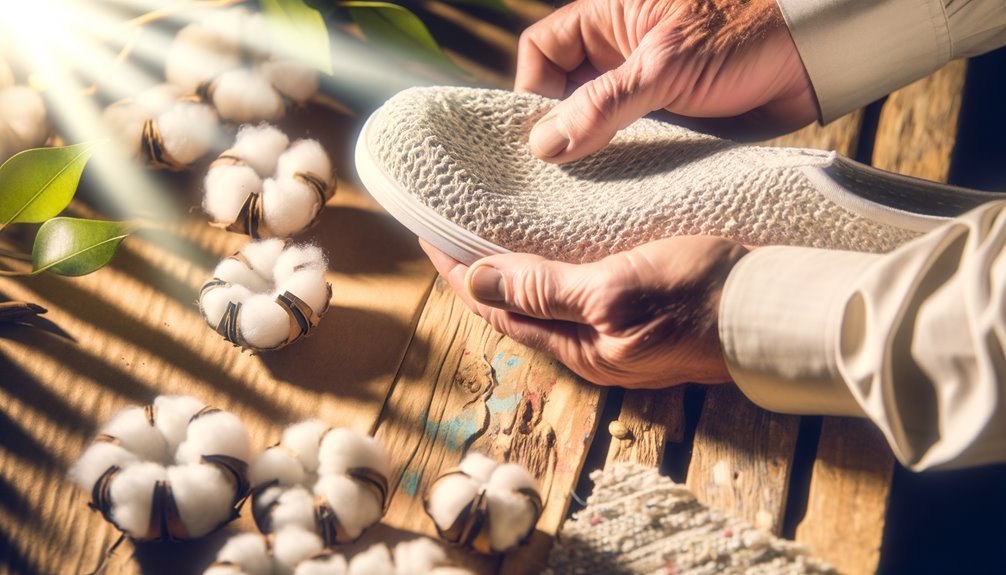
When considering eco-friendly materials for sneakers, recycled cotton stands out as a breathable and sustainable choice. This material, sourced from pre- and post-consumer fabrics, diverts waste from landfills while maintaining the natural, breathable qualities you’d expect from organic cotton. Choosing recycled cotton means you’re opting for a material with a reduced environmental impact. It requires less water, energy, and chemicals than traditional cotton farming, making it a more sustainable option. Plus, both recycled and organic cotton are biodegradable, so they won’t contribute to landfill waste at the end of their lifecycle. In the footwear industry, the simplified dyeing and printing processes of pre-processed recycled cotton further minimize resource consumption, reflecting a trend-aware commitment to eco-friendly materials.
The Versatility of Recycled Plastic in Footwear
Although often overlooked, the versatility of recycled plastic in footwear is transforming the industry toward more sustainable practices. By using recycled plastic, primarily from post-consumer bottles and ocean plastics, footwear production greatly cuts down waste and diverts about 91% of plastic from landfills. This eco-friendly approach results in a notable reduction in carbon emissions and a lower environmental impact, as it lessens reliance on virgin plastic. Brands like Snibbs are leading the way, crafting sneakers with 100% recycled plastic that boast both durability and style. This shift not only supports a circular economy but also offers you stylish footwear options that align with sustainable living. Embracing recycled plastic in sneakers conserves resources and mitigates the harmful effects of traditional manufacturing.
The Eco-Friendly Potential of Plant Starch
Recycled plastic has paved the way for sustainable innovation in footwear, and plant starch is another promising material gaining traction in the industry. Derived from renewable resources like potatoes and corn, plant starch offers a sustainable and eco-friendly alternative to traditional plastics. Its lightweight and durable nature enhances footwear comfort while minimizing environmental impact. By choosing plant starch, you’re supporting materials that naturally biodegrade, contributing to reduced carbon emissions and less reliance on fossil fuels. This aligns perfectly with the circular economy, ensuring sneakers return to the earth without harmful residues. Embracing plant starch in sneakers not only supports a more eco-friendly lifecycle but also taps into a growing trend in sustainable fashion, paving the way for a greener future.
Frequently Asked Questions
What Is the Most Eco-Friendly Shoe Material?
You’re wondering about the most eco-friendly shoe material? Consider organic cotton for its sustainable sourcing, recycled components for reduced carbon footprint, natural rubber, and plant-based options. Eco-friendly dyes, water-based adhesives, and fair trade practices enhance ethical, innovative technologies.
What Is the Healthiest Material for Shoes?
Ironically, while chasing the “healthiest” shoe material, you might stumble upon organic cotton’s clean embrace, bamboo’s sustainable charm, or vegan leather’s guilt-free allure. Immerse yourself in sustainable footwear trends with recycled rubber, non-toxic adhesives, and eco-friendly dyes.
What Are Nike Sustainable Materials?
Nike’s sustainable options include innovative recycled materials like Flyleather and Air soles. With circular production practices and responsible material alternatives, they focus on carbon footprint reduction, sustainable sourcing strategies, and eco-friendly manufacturing processes, promoting environmentally conscious designs and collaborations.
What Shoe Materials Are Biodegradable?
Ever wondered if your shoes could vanish like a magic trick into the earth? Opt for biodegradable leather, organic cotton, hemp fibers, recycled rubber, cork soles, bamboo fabric, plant-based plastics, natural latex, recycled polyester, and eco-friendly dyes.