

7 Essential Tips for Shoe Manufacturing Processes
When you’re manufacturing shoes, take precise foot measurements and use high-quality materials like full-grain leather for durability. Incorporate accurate pattern making and cutting using automated systems. Streamline assembly techniques with organized workstations and Just-In-Time inventory. Embrace creativity by aligning designs with trends and consider functionality. Guarantee rigorous quality control at every stage. Employ finishing techniques for aesthetic appeal. These steps enhance craftsmanship, guaranteeing maximum comfort and style. Discover more to refine your processes.
Key Takeaways
- Utilize accurate foot measurements and Brannock devices for comfortable shoe fitting.
- Select high-quality materials like full-grain leather and rubber for durability.
- Implement precision in pattern making with specialized software and automated cutting machines.
- Streamline assembly techniques with automated machinery and systematic workstations.
- Embrace creativity in design by aligning with fashion trends and consumer preferences.
Accurate Measurements for a Comfortable Fit
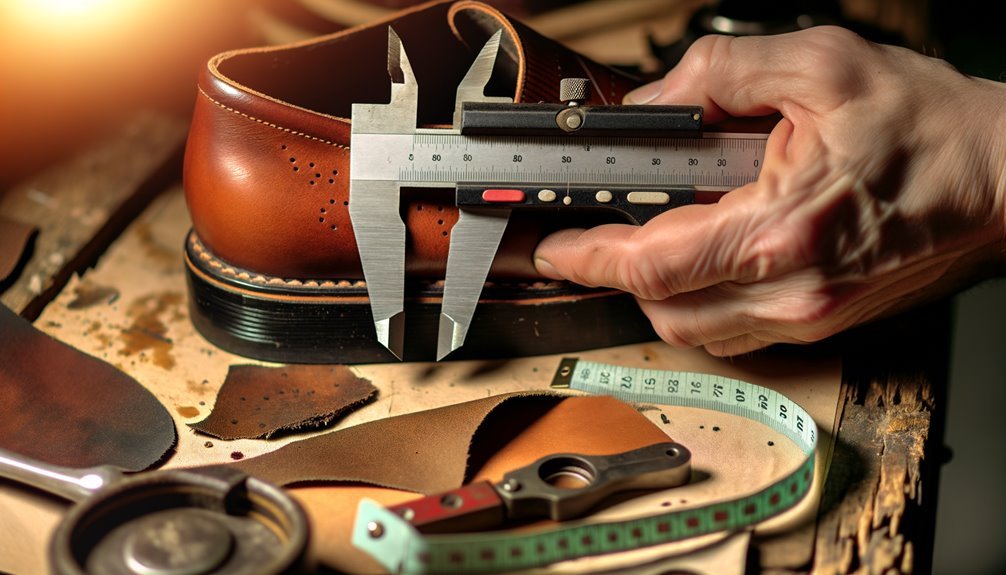
When guaranteeing a comfortable fit in shoe manufacturing, accurate measurements are paramount. You need to utilize specialized tools like Brannock devices to capture precise foot dimensions, including length, width, and arch height. These measurements are critical for crafting a well-fitted shoe last, the foundation for any shoe design. Remember, foot size can fluctuate throughout the day, so it’s advisable to take multiple measurements to account for changes due to swelling or activity levels.
Creating a detailed foot profile is essential for tailoring bespoke shoes that conform to unique foot anatomies. Regular updates in measurement techniques and staff training on precision measuring guarantee that your shoes provide ideal comfort and reduce the risk of blisters or discomfort. Accurate measurements lead to consistently comfortable footwear.
Strategic Material Selection for Durability
In the domain of shoe manufacturing, selecting materials strategically is essential to ascertain durability and longevity. Prioritize high-quality materials like full-grain leather, which develops a natural patina and resists wear. For outsoles, rubber is ideal due to its superior grip and wear resistance, accommodating diverse conditions. When considering textiles, evaluate their breathability and comfort against durability requirements, assuring alignment with performance expectations. Synthetics offer versatility and cost-efficiency, enabling production of aesthetically pleasing, durable footwear. Conduct rigorous quality assessments, including tests for thickness, elasticity, and tensile strength, to confirm materials adhere to design specifications and product standards. These practices in Material Selection not only enhance durability but also guarantee that your footwear meets both functional and aesthetic criteria.
Precision in Pattern Making and Cutting
Achieving precision in pattern making and cutting is vital for maintaining the integrity and quality of your shoe designs. Accurate foot measurements are foundational, focusing on length, width, and arch height to guarantee a comfortable fit. Precision in pattern making is essential as patterns act as templates for the cutting stage, determining material alignment and impacting the quality of high-quality shoes. Here’s how to enhance accuracy:
Precision in pattern making ensures the integrity and quality of shoe designs by guaranteeing a comfortable fit.
- Utilize Specialized Software: Employ tools and software for creating detailed patterns from technical drawings.
- Automate Cutting: Consider automated cutting machines to minimize waste and maximize precision.
- Post-Cutting Organization: Sort and prepare components meticulously to prevent defects.
Inaccuracies at the cutting stage can lead to compromised aesthetics and functionality, underscoring the importance of precision.
Efficient Assembly Techniques
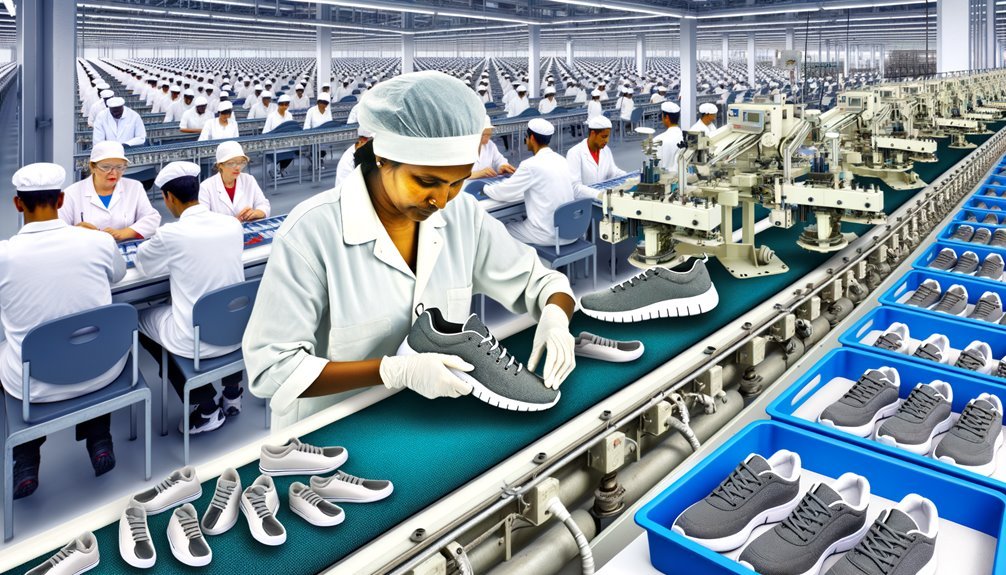
To enhance your shoe manufacturing process, focus on streamlined workflow strategies by integrating automated stitching machines and lean manufacturing principles to boost efficiency and reduce waste. Precision in component alignment is essential, so utilize advanced bonding equipment to guarantee durable and accurate assembly. Cross-training your workforce and implementing real-time quality control will further optimize production, allowing for swift adjustments and maintaining high-quality standards.
Streamlined Workflow Strategies
When optimizing your shoe manufacturing process, employing streamlined workflow strategies is crucial for boosting efficiency and productivity. By integrating automated cutting machines, you can drastically reduce material waste and enhance cutting precision, directly impacting the workflow’s effectiveness and supporting superior quality control. To further refine efficiency:
- Advanced Sewing Equipment: Utilize programmable sewing machines for consistent stitch quality and reduced production time.
- Systematic Workstation Layout: Arrange workstations according to the assembly sequence to minimize unnecessary movement and maximize productivity.
- Just-In-Time Inventory: Implement JIT systems to guarantee materials arrive exactly when needed, optimizing storage and preventing delays.
Regularly training your workforce on the latest techniques and machinery solidifies these strategies, leading to a more skilled team and improved assembly times.
Precision in Component Alignment
Precision in component alignment is paramount in shoe assembly to maintain both the integrity and visual appeal of the final product. Accurate alignment prevents issues like uneven stitching and misaligned parts, which can undermine both durability and aesthetics. Using specialized jigs and fixtures enhances precision, ensuring components are correctly positioned for ideal quality. Skilled technicians should consistently monitor alignment throughout assembly, as minor deviations can greatly affect the shoe’s fit and appearance. Incorporating automated alignment systems can streamline the process, minimizing human error and ensuring consistent precision across production runs. Regular training of assembly line workers emphasizes the importance of precision, leading to improved craftsmanship and fewer defects. This attention to detail ultimately elevates customer satisfaction and product quality.
Embracing Creativity in Design
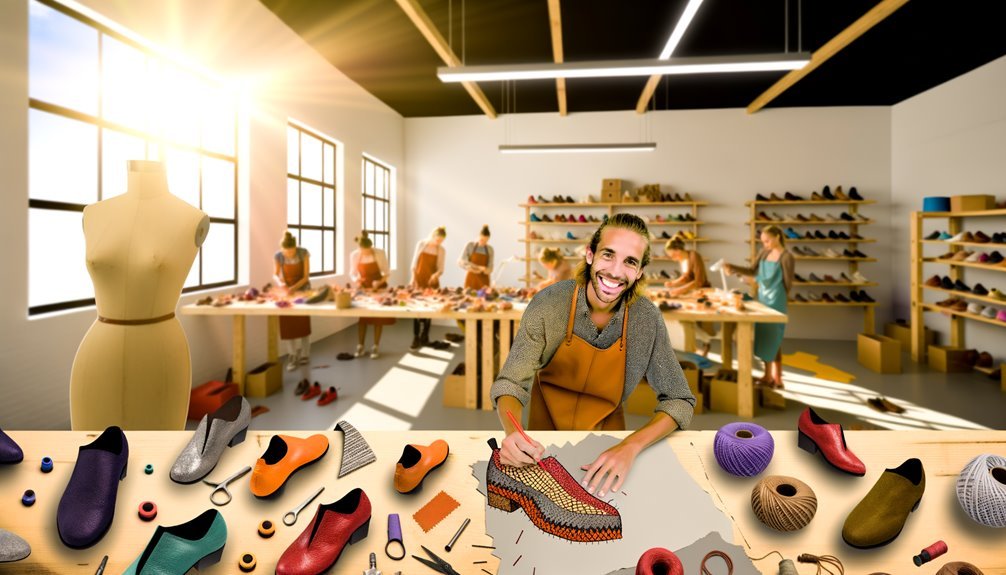
Incorporating trend-driven design inspiration requires a keen understanding of fashion cycles and consumer behavior analytics to guarantee your creations align with market demands. Balancing aesthetics and functionality is vital; consider ergonomic principles and material properties when drafting initial sketches and prototypes. Leverage CAD software for precision in detailing and iterating designs, enabling you to seamlessly integrate both style elements and practical features into your final product.
Trend-Driven Design Inspiration
Harnessing trend-driven design inspiration is essential for shoe manufacturers aiming to captivate modern consumers and enhance market presence. By aligning with current fashion trends and understanding consumer preferences, you can innovate and drive sales effectively. Here’s how you can stay ahead:
- Market Research & Analysis: Conduct thorough market research to identify consumer preferences and integrate these insights into your design process. This guarantees your products align with current fashion trends.
- Collaborations: Partner with influencers and trendsetters to gain insights into emerging styles. Their expertise can guide your design inspiration and help develop market-relevant collections.
- Social Media Engagement: Use social media platforms to gather real-time consumer feedback on design concepts. This streamlines decision-making and guarantees your products meet market demands effectively.
Balancing Aesthetics and Functionality
How do you strike the perfect balance between aesthetics and functionality in shoe design? It’s all about integrating style with functional requirements. Start by selecting the right materials used; breathable textiles can maintain comfort without compromising on style. Draw inspiration from fashion trends but guarantee the shoe design supports the wearer’s needs, whether it’s for casual, athletic, or formal use. Precision in pattern making and measurements is key, as these directly impact fit and comfort.
| Aspect | Consideration |
|---|---|
| Fashion Trends | Align with current styles |
| Materials Used | Choose breathable, durable textiles |
| Functional Requirements | Guarantee design supports the wearer’s needs |
| Pattern Making | Precision for best fit |
| Creative Elements | Unique stitching to enhance aesthetics |
Incorporate unique stitching or decorative elements to elevate the design while maintaining functionality.
Finishing Techniques for Aesthetic Appeal
Decorative stitching and embellishments add character, while the final quality check guarantees any imperfections like uneven finishes are corrected. Focusing on these finishing techniques with quality leather ensures the product meets high aesthetic standards, delivering visually appealing and durable shoes. This attention to detail distinguishes superior craftsmanship in shoe manufacturing.
Quality Control for Excellence
Having perfected the art of finishing techniques, the next critical step in shoe manufacturing is quality control for excellence. In the shoe manufacturing process, rigorous inspections occur at each stage to guarantee materials and final products meet industry standards. Begin by evaluating materials for defects, focusing on thickness, elasticity, and tensile strength—essential for maintaining product integrity. During assembly, identify common issues like uneven stitching or misaligned parts, which require corrective actions such as worker retraining or machinery adjustments. Final inspections emphasize the shoe’s appearance, size, and shape, ensuring each pair aligns with luxury standards before customer shipment. A thorough quality control process not only improves durability and comfort but also bolsters brand reputation and enhances customer satisfaction.
Frequently Asked Questions
What Are the Steps in the Shoe Manufacturing Process?
You’ll start with design innovations, focusing on foot measurement precision. Next, incorporate sustainability practices in material selection. Proceed with cutting and stitching, ensuring assembly accuracy. Finally, implement quality control to meet specifications and maintain production standards.
What Are the Four Factors of Production for Shoes?
You’d think making shoes is simple, right? But nope. Material sourcing, labor costs, technological advancements, and entrepreneurial flair drive shoe production. Master these, and you’ll navigate the complex world of manufacturing like a seasoned pro.
What Were the Main Motivators for Improvements in Shoe Manufacturing?
You’re looking at key motivators like technological advancements for efficiency, sustainability initiatives for eco-friendly production, and cost reduction to stay competitive. These drivers influence how you streamline processes and adopt innovative materials in shoe manufacturing.
What Are the Components of Shoe Manufacturing?
You’re exploring shoe manufacturing components. Focus on design innovations, where precise measurements drive style; select footwear materials like leather or textiles for quality; use advanced production techniques, including cutting, lasting, assembling, and finishing, ensuring a flawless final product.