

Leather Shoe Manufacturing Steps and Materials Explained
In leather shoe manufacturing, you’ll first choose the leather type, like full-grain for durability. Prepare leather by tanning, cleaning, and conditioning. Precise measurements and detailed shoe last creation guarantee fit. Convert 3D designs into 2D patterns for cutting. Stitch components and attach linings, soles, and hardware. Finish with polishing and protective coatings. Throughout, quality control checks for alignment and secure attachment are critical. Learn the full complexities of this artistry while exploring the subject further.
Key Takeaways
- Leather selection involves choosing from full-grain, top-grain, suede, nubuck, and patent leather, each with unique properties and care requirements.
- Precise cutting of leather into patterns ensures accuracy and alignment with the shoe’s design and fit.
- Foot measurements are vital for crafting the shoe last, shaping the shoe’s structure and ensuring proper fit.
- The assembly process includes stitching components, attaching linings, and fixing the sole to the shoe upper.
- Finishing techniques like buffing, polishing, and dyeing enhance appearance while quality control ensures durability and comfort.
Overview of Leather Footwear Manufacturing
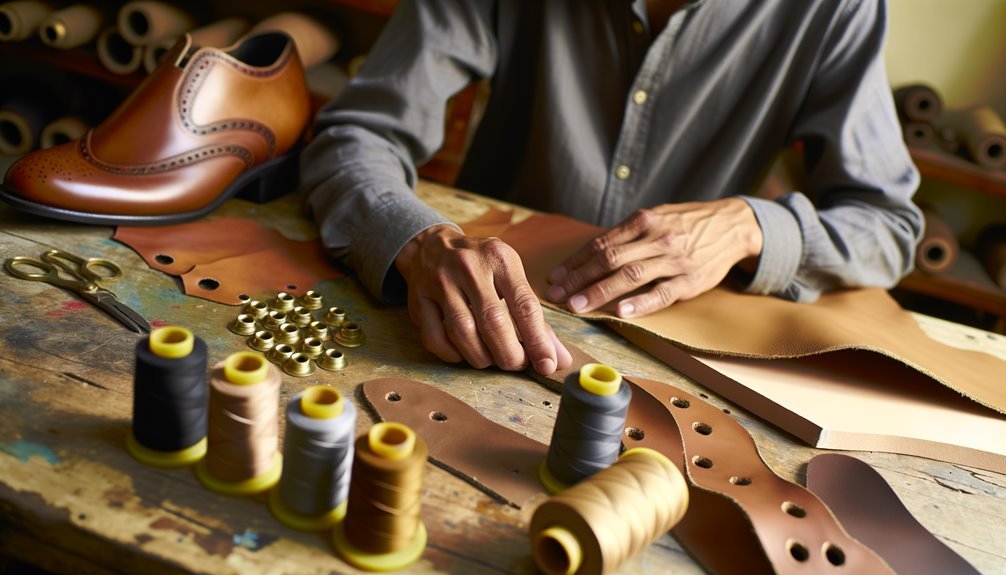
Although leather footwear manufacturing has evolved considerably over the years, it still retains a blend of traditional craftsmanship and modern technology. In the shoe manufacturing process, leather serves as the cornerstone material due to its unmatched durability and style. The process begins with the precise cutting of quality leather, where skilled workers use patterns to guarantee accuracy. Various types of leather—such as full-grain, top-grain, and suede—are selected based on the desired quality and aesthetic of the final product. Following cutting, stitching is executed with precision, reinforcing the shoe’s structure. Each stitch is critical, as it contributes to the footwear’s overall durability and comfort. Balancing traditional techniques with advanced machinery, this intricate process guarantees that every pair meets high standards of excellence.
Choosing the Right Leather for Footwear
Selecting the right leather for footwear is a crucial step that directly impacts the durability, comfort, and appearance of the final product. Full-grain leather stands out for its unmatched durability, breathability, and patina development, ensuring a comfortable fit. Top-grain leather, with its refined surface, offers affordability and stain resistance but sacrifices some breathability. For a softer, more comfortable feel, consider suede leather, though it requires meticulous care to prevent wear and stains. Nubuck leather, known for its luxurious velvety texture, is durable but demands regular maintenance. Patent leather‘s glossy finish provides easy cleaning but can crack and lacks breathability. Each leather type presents distinct benefits and challenges, influencing the shoe’s performance and aesthetic appeal. Choose wisely for ideal results.
Taking Accurate Measurements and Defining Style
When creating bespoke leather shoes, you’ll need to conduct a precise foot anatomy assessment, measuring dimensions like foot length, width, and arch height using calipers and digital scanners. This data is essential for crafting the shoe last, which determines the shoe’s fit and serves as a blueprint for the design process. Collaborate with the client to select the shoe shape, materials such as full-grain leather, and unique design features, ensuring the final product aligns with both their functional needs and aesthetic preferences.
Precise Foot Anatomy Assessment
In bespoke shoemaking, precise foot anatomy assessment is essential for achieving superior fit and comfort. You’ll start by taking accurate measurements of your foot—length, width, and arch height. These precise foot anatomy details are important in crafting a Shoe Last that mirrors your foot’s unique contours. The Master Last-Maker uses these measurements to create a mold ensuring ideal support and comfort. Advanced techniques, like photographs and scans, capture every anatomical nuance, providing a detailed reference for the last-making process. This meticulous data collection lays the foundation for the shoemaking journey, affecting everything from material selection to the final fit. Your initial measurements and style preferences are pivotal, defining the bespoke experience and resulting in unparalleled comfort and style.
Style, Shape, and Material Choices
Craftsmanship in bespoke shoemaking hinges on meticulous style, shape, and material choices. You’ll begin by defining your preferred shoe style, selecting from varied shapes that best suit your aesthetic and functional needs. Master Last-Makers craft shoe lasts, essential for forming bespoke shoes, using precise measurements of your foot’s length, width, and arch height. These lasts guarantee a fit tailored to your unique foot shape and movement.
When it comes to materials, your selection, such as full-grain or suede leather, plays a vital role in both the shoe’s appearance and its performance. Each material offers distinct characteristics—full-grain leather for durability and sophistication, suede for texture and elegance—allowing you to align with your defined style and purpose, securing a personalized footwear experience.
Measurement Techniques and Tools
Selecting the right style, shape, and materials sets the foundation for creating bespoke leather shoes, but achieving the perfect fit demands precise measurement techniques and tools. Accurate measurements are critical; they guarantee a perfect fit and are taken by a Master Last-Maker who uses advanced measurement tools to capture precise dimensions of your foot anatomy. Customization begins here, as clients select shoe shapes and materials that reflect their personal style and comfort needs. Detailed processes involve capturing foot images and scans, creating shoe lasts that mirror your unique foot shape. By employing advanced measurement techniques, errors are minimized, enhancing overall comfort. Documented specifications guide production, considering use, color, and design features, guaranteeing the final product matches your expectations.
Crafting the Shoe Last for Perfect Fit
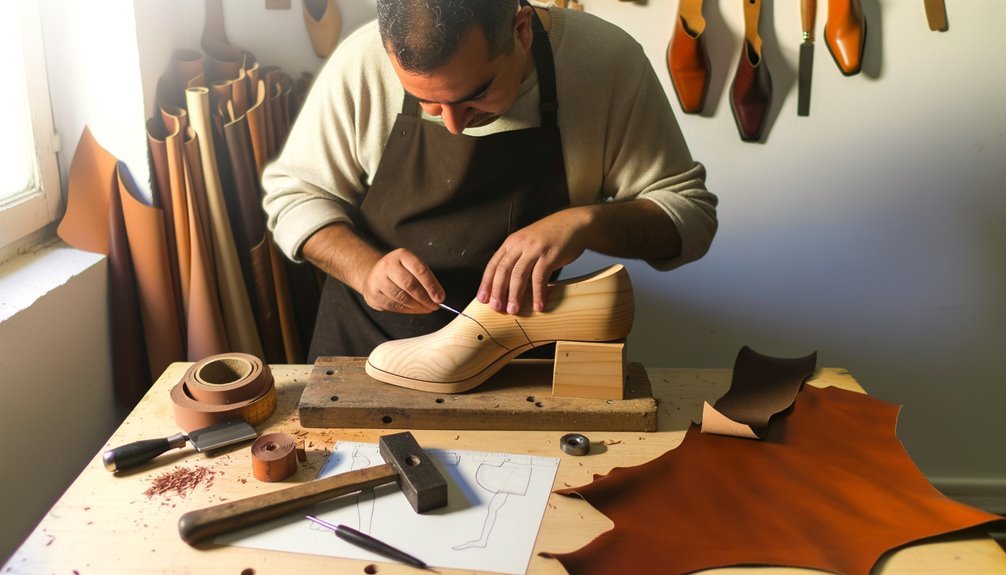
In crafting the shoe last for a perfect fit, you’ll begin with precision measurements and advanced imaging techniques to capture the intricate details of the client’s foot anatomy. Whether opting for wooden or plastic molds, you’ll need to evaluate factors such as foot movement and heel height to create a tailored fit that aligns with the shoe’s design specifications. Throughout this process, the last serves as a critical framework, ensuring both the shoe’s construction integrity and its long-term fit and shape retention.
Precision in Last-Making
Although often overlooked, the precision in last-making is pivotal for crafting shoes that fit perfectly. The last serves as the foundation for your shoe design, emulating your foot shape to guarantee a bespoke fit. Master Last-Makers meticulously carve these forms from wood or plastic, using precise measurements like length, width, and arch height. This guarantees that every nuance of foot movement and heel height is accounted for. With variations tailored for different shoe styles, each last supports specific aesthetic and functional needs, maintaining shape and fit over time. The crafting process can involve up to 300 steps, underscoring the meticulous attention to detail required to achieve a perfect fit, marrying function with personalized style in every pair.
Custom Molds for Footwear
Creating a custom mold for footwear begins with the precise crafting of the shoe last, a critical component in ensuring a perfect fit. As a master last-maker, you’d take precise measurements of a client’s foot, including length, width, and arch height, to design custom lasts. These molds can be carved from durable materials like wood or plastic, tailored to accommodate foot movement and heel height. Custom lasts are essential for bespoke shoes, aligning with individual foot anatomy to enhance fit and performance.
| Measurement | Material |
|---|---|
| Length | Wood |
| Width | Plastic |
| Arch Height | Wood/Plastic |
| Heel Height | Adjustable |
| Foot Movement | Flexible |
Utilizing these shoe lasts throughout shoemaking maintains the shoe’s intended shape and fit, ensuring both comfort and style.
Designing and Creating Pattern for Shoe Components
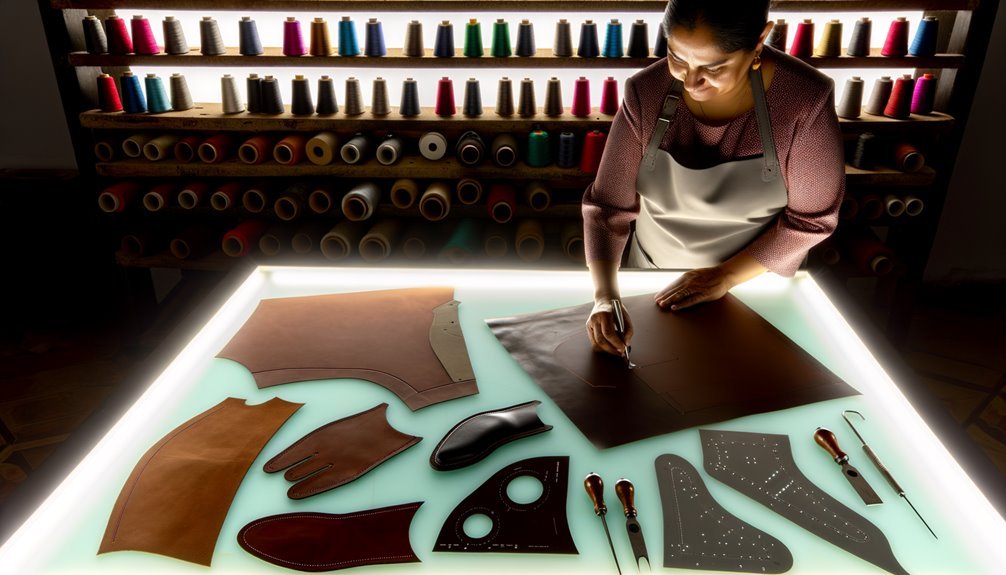
Crafting the perfect leather shoe begins with designing and creating precise patterns for its components. The process initiates with a 3D last created by the last-maker as the foundational form. Pattern-makers then translate this into 2D designs on the last, meticulously detailing seams, edges, and perforations. This pattern making is vital, guiding the subsequent pattern cutting of each shoe component. The leather used for the upper is selected carefully, with clickers adhering to templates to guarantee consistency and minimize waste. These templates are not just for cutting; they also facilitate accurate stitching and assembly, impacting fit, comfort, and aesthetics. Precision in pattern and material choice is essential for the integrity and quality of the final shoe.
Cutting and Preparing Leather for Assembly
Precision is key in cutting and preparing leather for assembly in shoe manufacturing. You’ll start by utilizing metal dies and hydraulic presses to execute the cutting process, guaranteeing each leather section is accurately shaped with minimal waste. Skilled craftsmen, known as clickers, meticulously evaluate the leather’s weight, pliability, and any defects. This assessment is essential for maintaining the shoe’s overall quality. A detailed paper pattern, based on precise measurements and the shoe last, outlines each component—vamp, cap, tongue, and quarters—guiding the cutting phase. By employing efficient techniques like die cutting and manual clicking, you transform designs into tangible pieces, directly impacting the assembly fit and final appearance. Finally, check the edges to confirm readiness for the upper assembly phase.
Stitching Techniques for Assembling Shoe Uppers
Although often overlooked, stitching techniques are fundamental in assembling shoe uppers, directly influencing the shoe’s durability and comfort. A precise lockstitch is essential for high-quality leather shoes, providing tension retention and a clean finish that enhances durability. The lockstitch’s interlocking threads guarantee the shoe uppers remain securely fastened, critical for long-term wear. Meanwhile, the chain stitch offers flexibility and ease of repair, making it ideal for casual footwear where stretch and adaptability are key. Overseaming introduces a decorative element, adding aesthetic value to style-conscious designs without compromising structural integrity. Each technique not only fortifies the shoe’s structure but also guarantees a snug fit, aligning with specific design intentions and material properties to optimize both functionality and visual appeal.
Attaching Soles and Heels for Durability
When you attach soles and heels, selecting the right construction technique is vital for durability and functionality. The Goodyear welt method, known for its waterproof seal and replaceability, offers superior longevity, whereas the Blake stitch provides a sleek look and flexibility but may fall short in durability. Cement construction, on the other hand, uses strong adhesives for a quick bond, though it doesn’t match the lifespan of welted methods, and quality control remains essential to prevent premature wear.
Sole Attachment Techniques
A critical component in crafting durable leather shoes is the technique used for sole attachment, with several methods available to suit different needs. Sole attachment techniques, like the Goodyear welt and Blake stitching, are pivotal for shoe durability. Goodyear welt construction involves a leather strip connecting the upper and insole to the outsole, enhancing longevity and allowing resoling. Blake stitching directly binds the upper to the outsole, offering flexibility and efficient production.
| Technique | Characteristics |
|---|---|
| Goodyear Welt | Durable, resoling possible, uses leather welt |
| Blake Stitching | Lightweight, flexible, direct stitching |
| Adhesive | Quick, cost-effective, casual footwear |
| Alignment | Essential for comfort and durability |
Proper alignment during attachment is vital to avoid discomfort and guarantee long-lasting wear.
Heel Fastening Methods
Heel fastening is a crucial stage in shoe manufacturing, demanding precision and the right technique to confirm durability. You’ll often encounter heel attachment techniques like Blake stitching and Goodyear welt construction. These methods guarantee the heels stay secure, allowing for future sole replacement and enhancing durability. Materials used for heels, such as wood, rubber, or leather, are chosen for their durability and specific functionality. To boost adhesive strength, high-quality adhesives complement mechanical fastening, securing a robust connection between the heel and outsole. Reinforcement elements like internal stiffeners or shanks add support, preventing premature wear. Quality control checks are essential, inspecting for defects and confirming the heel’s secure attachment, aligning with durability and performance standards.
Final Craftsmanship and Finishing Touches
In the final craftsmanship and finishing touches stage, precision and expertise converge to transform each leather shoe into a masterpiece of luxury footwear. Here, a master craftsman adds stiffeners, guaranteeing structural integrity and comfort. Techniques like Goodyear, Blake, and Adhesive construction provide durability and allow future sole replacements. Once construction is complete, the finisher carefully removes the shoe last, polishes surfaces, and perfects the shoe’s appearance. This meticulous attention to detail guarantees the high standards of luxury footwear are met. A rigorous quality check follows, examining every stitch and finish to uphold material quality and design integrity. This stage is vital for delivering high-quality products, encapsulating the culmination of craftsmanship, material quality, and design integrity.
Ensuring Quality Control in Shoe Manufacturing
After the meticulous craftsmanship and finishing touches are complete, guaranteeing quality control is paramount in upholding the luxury standards of leather shoe manufacturing. You’ll encounter multiple inspection stages to maintain excellence:
Ensuring quality control is crucial to maintaining luxury leather shoe standards.
- Raw Material Inspection: Assess raw material for defects and compliance with design specifications. Early detection of issues reduces waste and rework.
- In-Process Checks: During assembly, validate each production stage, guaranteeing components are aligned and securely attached, addressing defects like uneven stitching.
- Defects Management: Retrain workers, recalibrate machines, or adjust shoe lasts to adhere to specifications and fix misalignments.
- Final Inspections: Examine finished shoes for flaws, size accuracy, and surface finish. This guarantees each pair meets luxury standards before shipping.
Adhering to these processes guarantees that quality control is consistent and effective.
Addressing Environmental and Regulatory Considerations
While maneuvering through the complexities of leather shoe manufacturing, it is essential to address the environmental and regulatory considerations that govern the industry. Adhering to environmental regulations involves minimizing water usage, energy consumption, and waste during tanning processes. Implementing sustainable practices, such as using vegetable-tanned leather, guarantees eco-friendly production. Ethical labor practices are non-negotiable, guaranteeing compliance with global standards for worker rights and safety. Water conservation techniques are vital, reducing the ecological footprint considerably. Embrace recycling initiatives to manage material waste efficiently. Certifications like ISO 9001 and Leather Working Group demonstrate compliance with quality and environmental standards. Staying abreast of innovations reduces harmful emissions, further enhancing sustainability in leather footwear manufacturing. Meeting these standards fosters a responsible industry.
Frequently Asked Questions
What Is the Process of Making Leather Shoes?
You’re exploring the leather shoe-making process, involving shoe design, choosing leather types, precise stitching techniques, selecting durable sole materials, and meticulous finishing processes. Quality control guarantees every pair meets standards before they’re polished and shipped.
What Is the Sequence of Steps in Shoe Manufacturing?
Rome wasn’t built in a day, and neither are quality shoes. Start with design techniques, using various leather types. Employ craftsmanship skills to enhance shoe durability, integrate sustainable practices, and guarantee quality control for high-quality footwear.
How Are Shoes Made in a Factory Step by Step?
You’re exploring shoe making in factories. It starts with shoe design, then production techniques take over, ensuring quality control. Sustainability practices and labor conditions are essential, aligning with market trends for material specifications and technical terminology throughout the process.
What Are the Raw Materials for Leather Shoes?
You’re diving into a sea of choices! Leather types like full-grain scream durability, while soles crafted from rubber and EVA offer unbeatable comfort. Marvel at lining options, intricate stitching techniques, finishing processes, and rigorous quality standards. Enjoy!


